The 5 Best Points of Interest in Iceland
Of all the Icelandic sites I had the chance to explore, these are my five favourite places of interest. They showcase the island's geological diversity, from spectacular waterfalls to glaciers and volcanic landscapes.
1. Sigöldugljúfur canyon
Region: Highlands
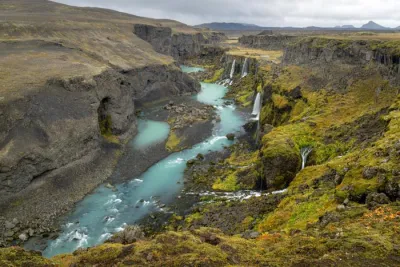
The Sigöldugljúfur canyon is one of Iceland's most fascinating places. A true hidden treasure of the region, it is still rarely visited by tourists.
The canyon is a small oasis in the middle of the Highlands, isolated and unusually lush for the region. The shades of moss and vegetation contrast perfectly with the turquoise water of the river. What a privilege to be able to contemplate the spectacle of dozens of waterfalls in complete tranquillity! A must-see on your visit to Iceland.
2. Vestrahorn and Stokksnes beach
Region: South
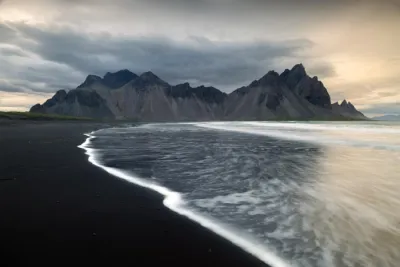
Vestrahorn is a majestic 454 meter-high mountain in southeastern Iceland. Although its height is moderate, its steep slopes and distinctive silhouette make it spectacular. It overlooks the magnificent black sand beach of Stokksnes, bordered by lush green dunes.
Although relatively popular, it remains far less touristy than the main sites of the Golden Circle, probably due to its remoteness from the capital. Yet it's only an hour's drive from the famous Jökulsárlón Lagoon. Stokksnes beach is particularly popular with photographers, with the reflection of Vestrahorn in the bay and the dunes contrasting beautifully with the black sand.
Between the café and the beach, you can also visit a Viking village that was reconstructed for the purposes of a movie- which, funnily enough, was never actually filmed! The bay is also known for attracting many seals, which you can observe on your nearby walks.
3. Jökulsárlón Glacier Lagoon
Region: South
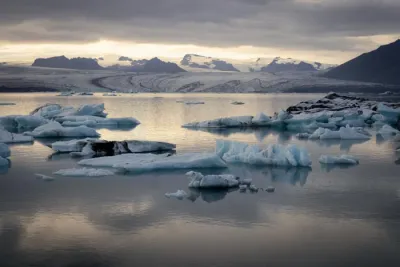
Jökulsárlón, meaning ‘glacial river lagoon’ in Icelandic, is a vast glacial lake located to the south of Vatnajökull National Park. It is one of Iceland's most popular sites. Nestling at the foot of the Breiðamerkurjökull glacier, the lake was formed when the glacier began to retreat from the edge of the Atlantic Ocean. Since then, it has expanded at varying rates as the glacier has melted, and now covers an area of around 18 km², with the glacier front located about 8 kilometers from the ocean.
The Jökulsárlón lagoon is an extraordinary place not to be missed, with its waters filled with icebergs that regularly break off from the immense glacier. The lake offers an ever-changing natural spectacle of ice sculptures, with the impressive ice cap of Vatnajökull as a backdrop. The icebergs can be seen in two different colours: milky white and bright blue, depending on the air trapped in the ice and the play of light between the ice crystals.
4. Fjadrárgljúfur canyon
Region: South
Difficulty: Very easy
Average duration: 1 h
Length: 2.2 km
Elevation gain: 70 m
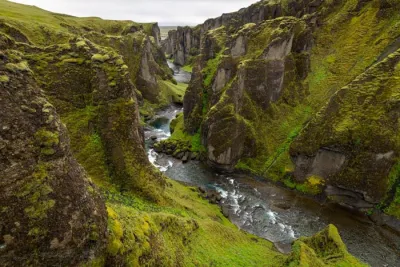
The Fjaðrárgljúfur Canyon hike runs alongside one of Iceland's most spectacular geological formations: a winding, two-kilometer-long canyon with steep walls that plunge over 100 meters down to the Fjaðrá River. Carved out around 10,000 years ago at the end of the Ice Age, the canyon offers impressive views of bright green, moss-covered cliffs contrasting with the turquoise river below.
The hike ends at an observation deck with breathtaking views of one of the canyon's most spectacular parts, including the picturesque Mögárfoss waterfall.
Once little-known, the canyon gained popularity in 2016 after appearing in music videos, notably Justin Bieber's, and TV series, such as Game of Thrones. It now attracts large numbers of visitors.
5. Svínafellsjökull Glacier
Region: South
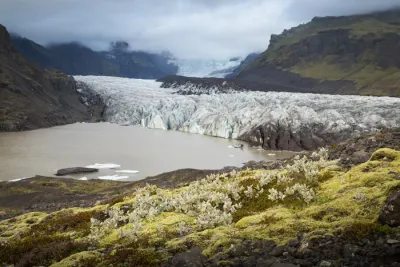
Svínafellsjökull, which simply means “Svínafell Glacier” in Icelandic, is one of the many glacier tongues that form part of Europe's largest ice cap, the Vatnajökull, covering 11% of Iceland's surface. This impressive glacier is 8 kilometers long and 800 metres wide. A short walk takes you close to this majestic glacier and its lake dotted with small icebergs.
The glacier lake, modest in size and located on one side of the glacier, allows you to observe the glacier at close range, much closer than the other Vatnajökull glacier tongues. It's a unique and unforgettable experience, both magnificent and awe-inspiring.