
Via Ferrata Ivano Dibona and Marino Bianchi
Key facts about the hike
- Via ferrata difficulty
- C Via ferrata grades, from A (easy) to E (extremely difficult): my via ferrata scale
- Difficult
- Duration
- 11h Estimated time, short breaks included (photos, water, snacks), picnic not included: how it is calculated
- Distance
- 15.9km
- Elevation gain
- 1,810m
- Hiking difficulty
- Very hard
- Type of route
- Loop
- Maximum altitude
- 3,150 m
- Vertiginous Five levels, depending on how exposed the route is: the levels in detail
- Highly
- Marked
- Yes
- Popularity
- Low
- Start point
- 46.55722, 12.20159
- Activity
- Hiking and Via Ferrata
Hike overview
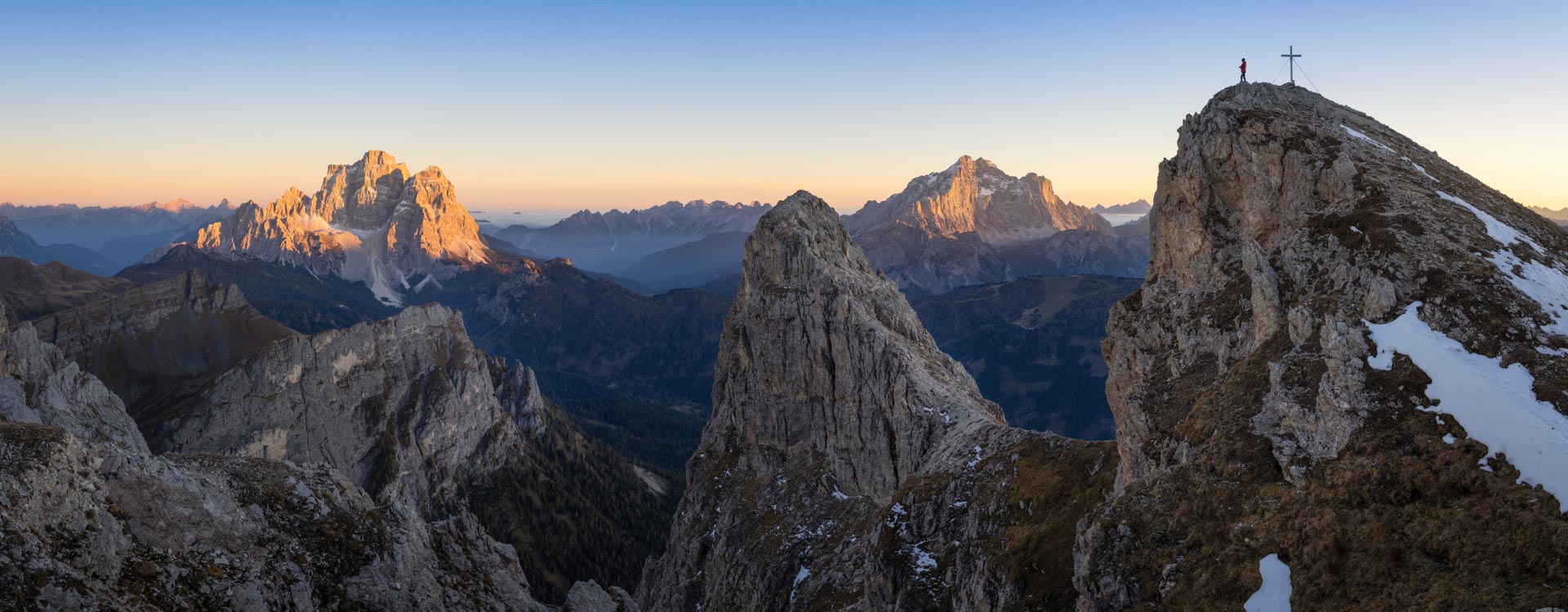
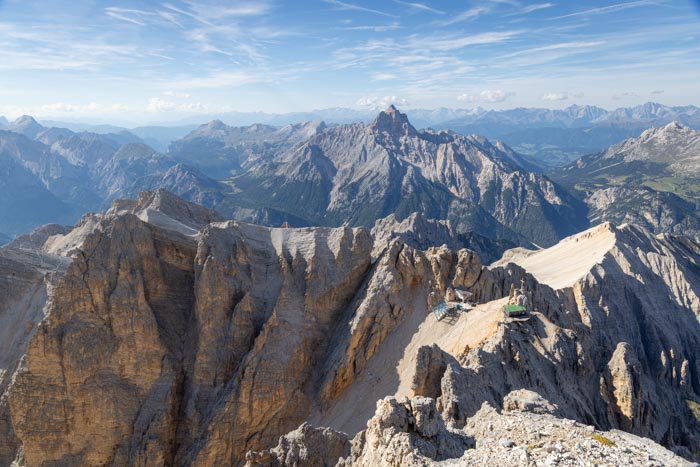
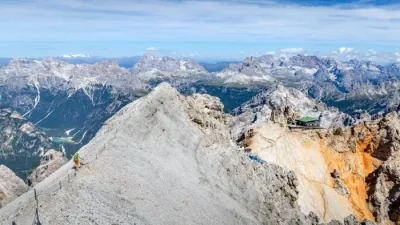
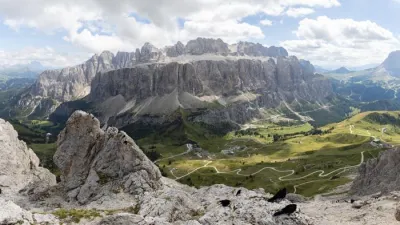
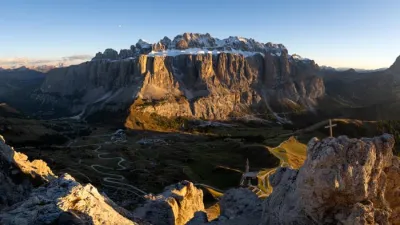
This extensive loop through the Cristallo Massif allows you to experience the area's two premier via ferratas in a single day: the long, panoramic Ivano Dibona Ridge and the more technical Marino Bianchi Summit Ridge. You'll traverse five kilometers of exposed ridges, cross the spectacular suspension bridge made famous by the movie Cliffhanger, and reach the 3,150-meter summit of Cristallo di Mezzo.
This magnificent, long, and challenging route is considered one of the most beautiful via ferrata climbs in the Dolomites and is reserved for experienced hikers accustomed to high altitudes and long days in alpine terrain.
Map and elevation profile of the hike
Via Ferrata Ivano Dibona and Marino Bianchi
Description and difficulties of the hike
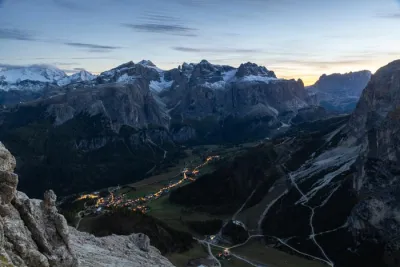
The route involves a very long and demanding day: nearly 16 km, 1,810 meters of elevation gain, and over ten hours of hiking. The operating hours of the Rio Gere–Son Forca chairlift (8:30 a.m.–4:30 p.m.) are too short to complete the entire circuit, so it is essential to start from Passo Tre Croci. Plan for an early start, especially since Passo Tre Croci is also the starting point for the popular Lago di Sorapis trail and parking spots fill up quickly.
From Passo Tre Croci, reach Forcella Son Forca (2,110 m) in about an hour via trail no. 203. Then, descend into Val Padeon via an unnumbered trail. Gradually climb northward to the base of the Ivano Dibona via ferrata, which begins gently with short equipped sections up to Forcella del Vecio (2,687 m).
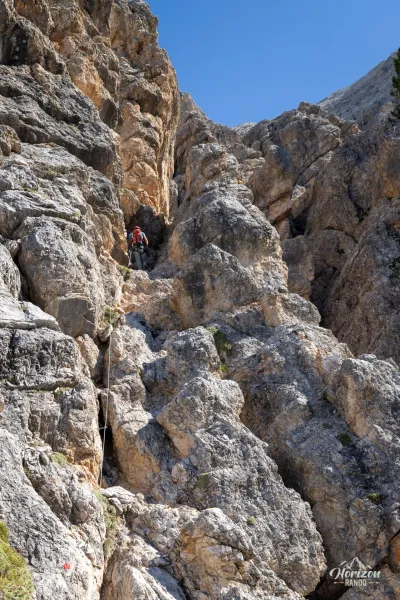
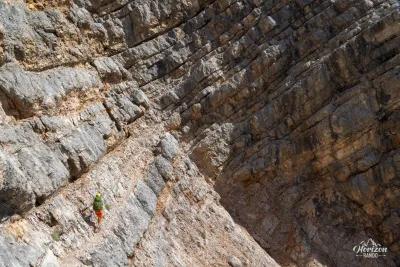
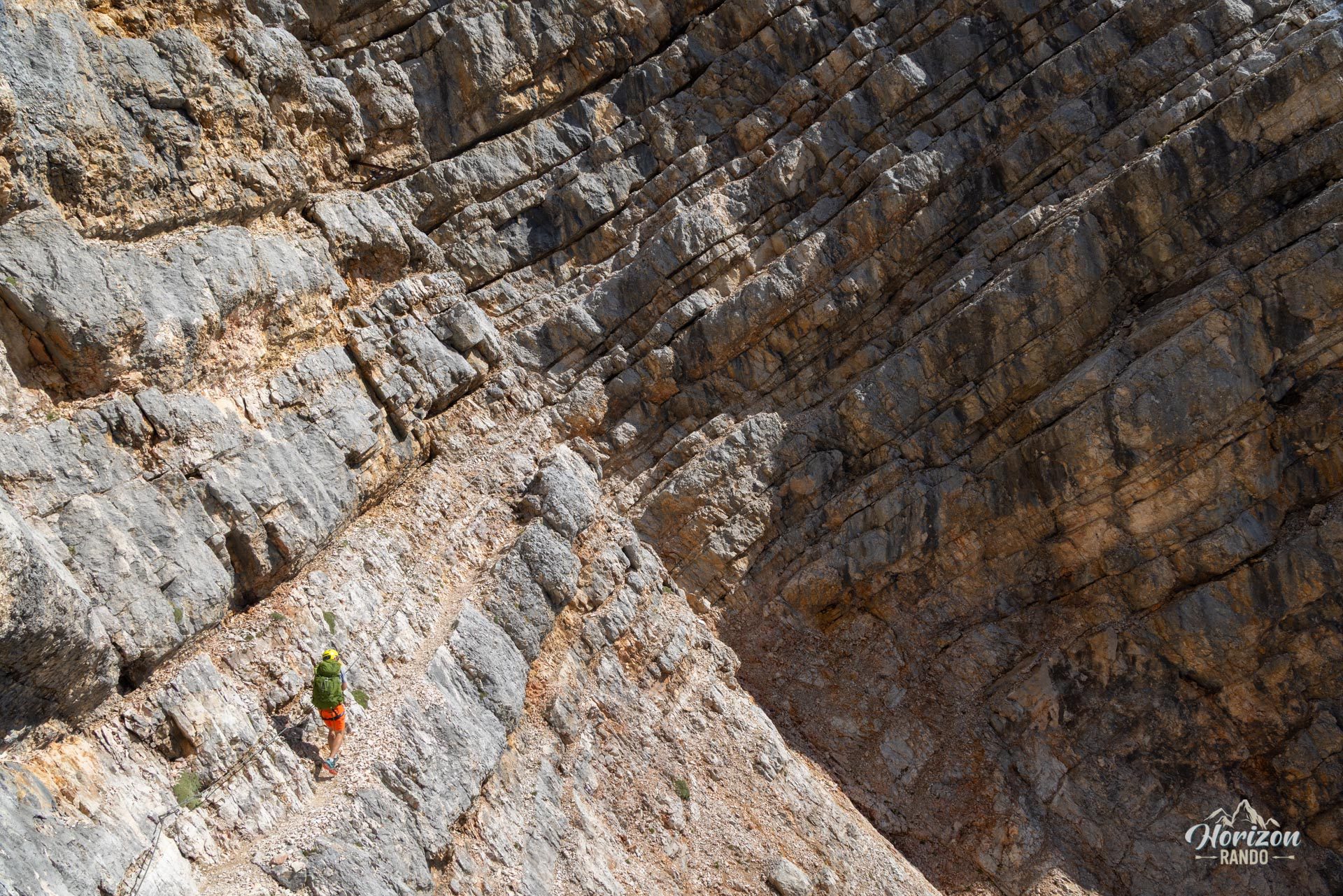
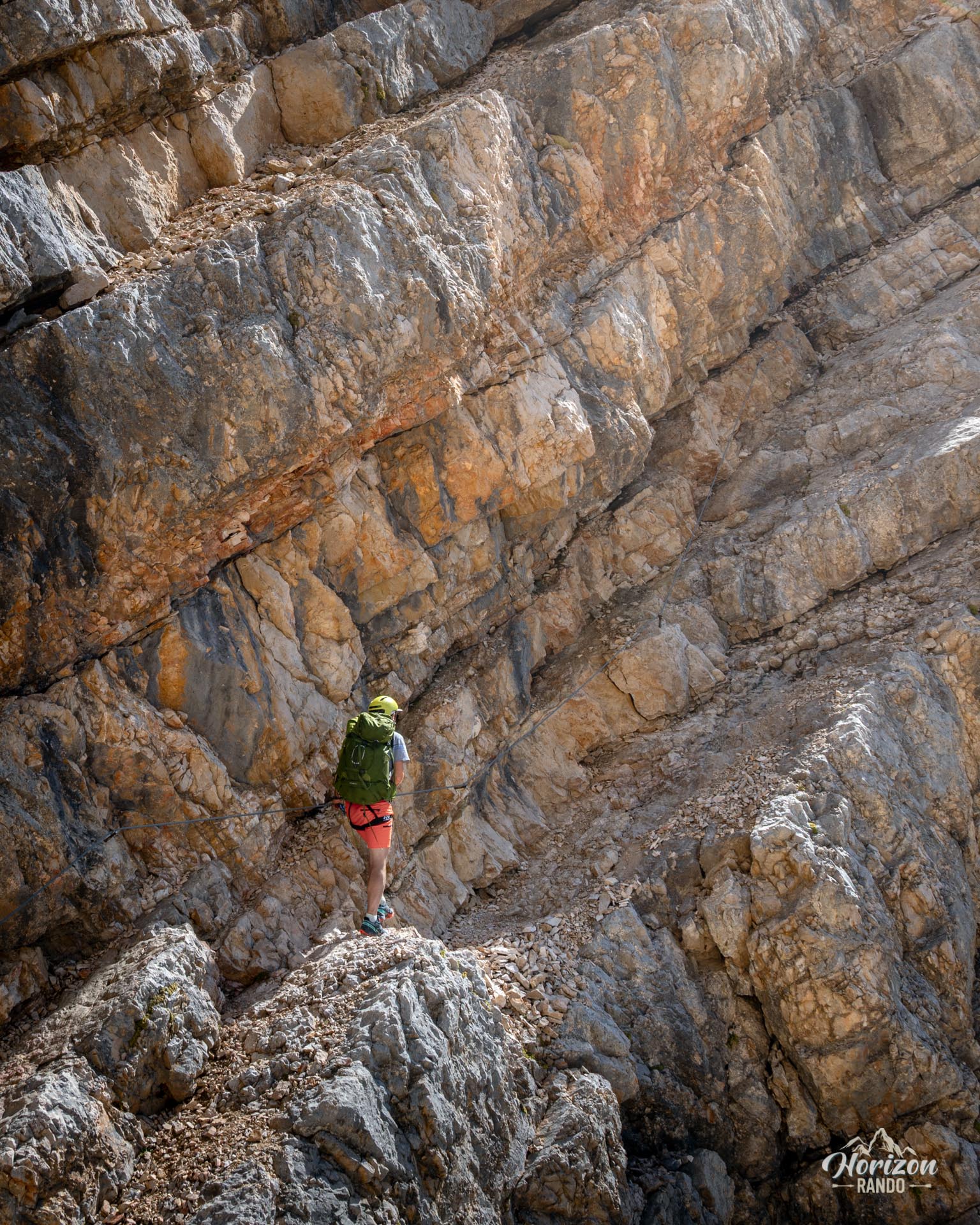
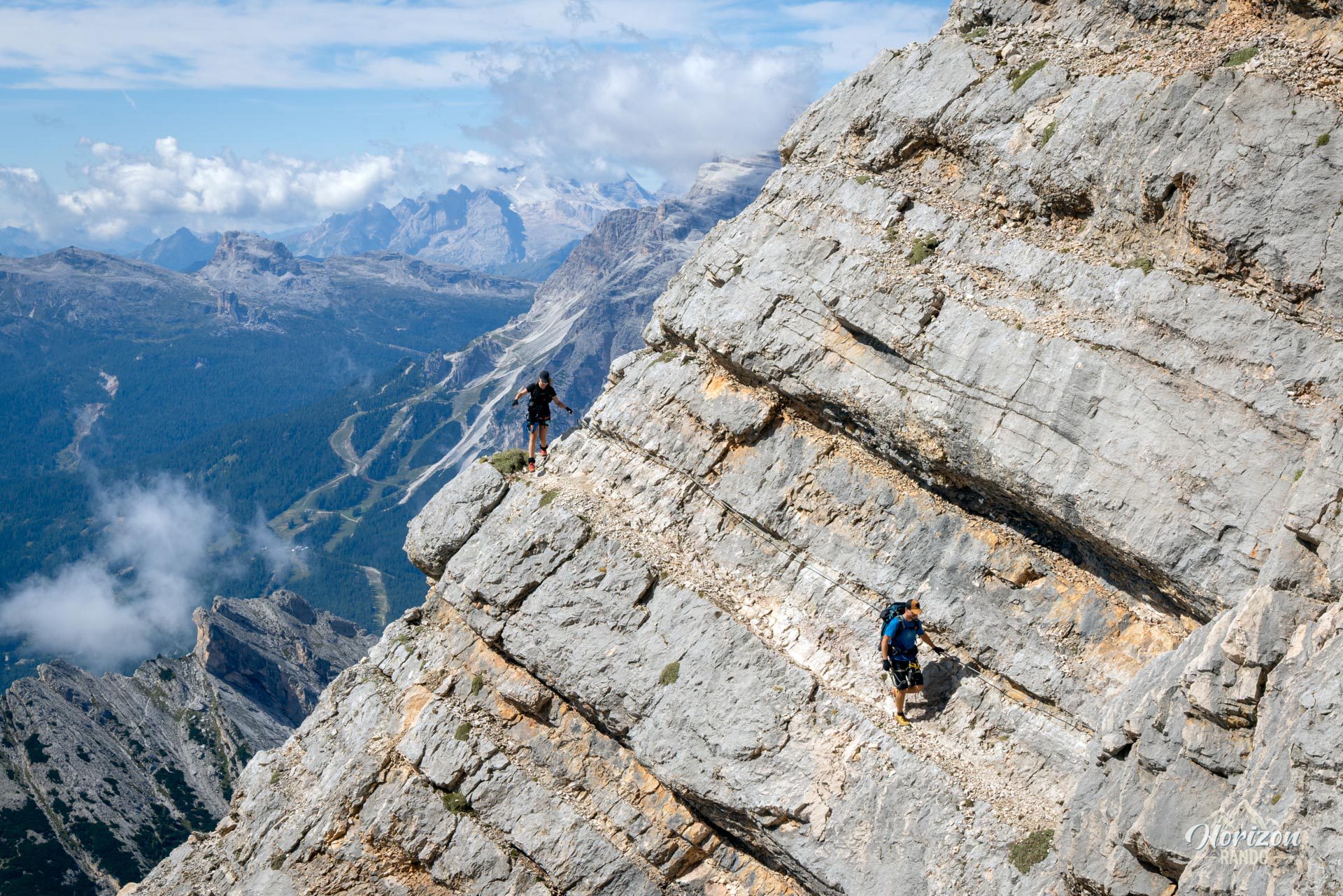
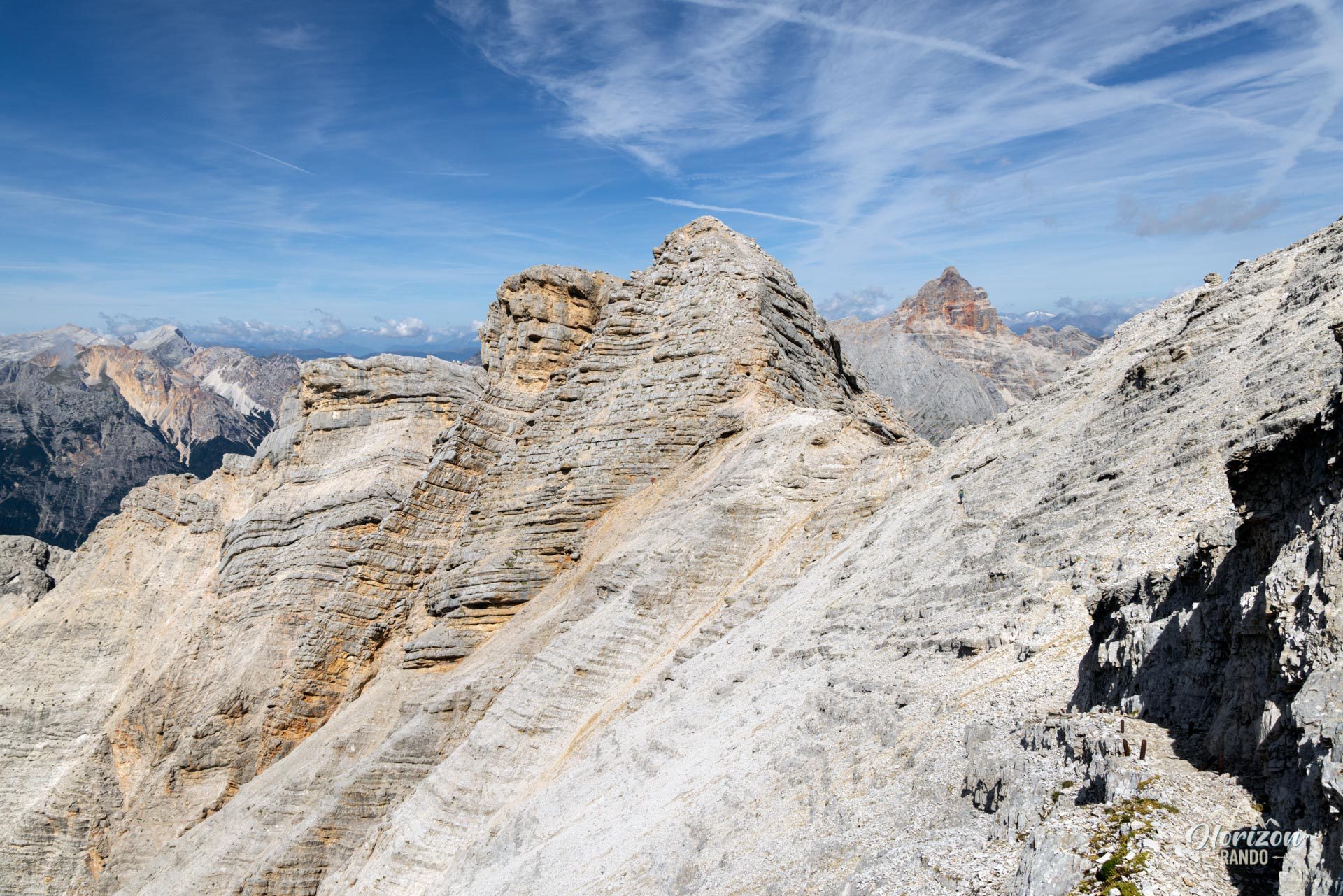
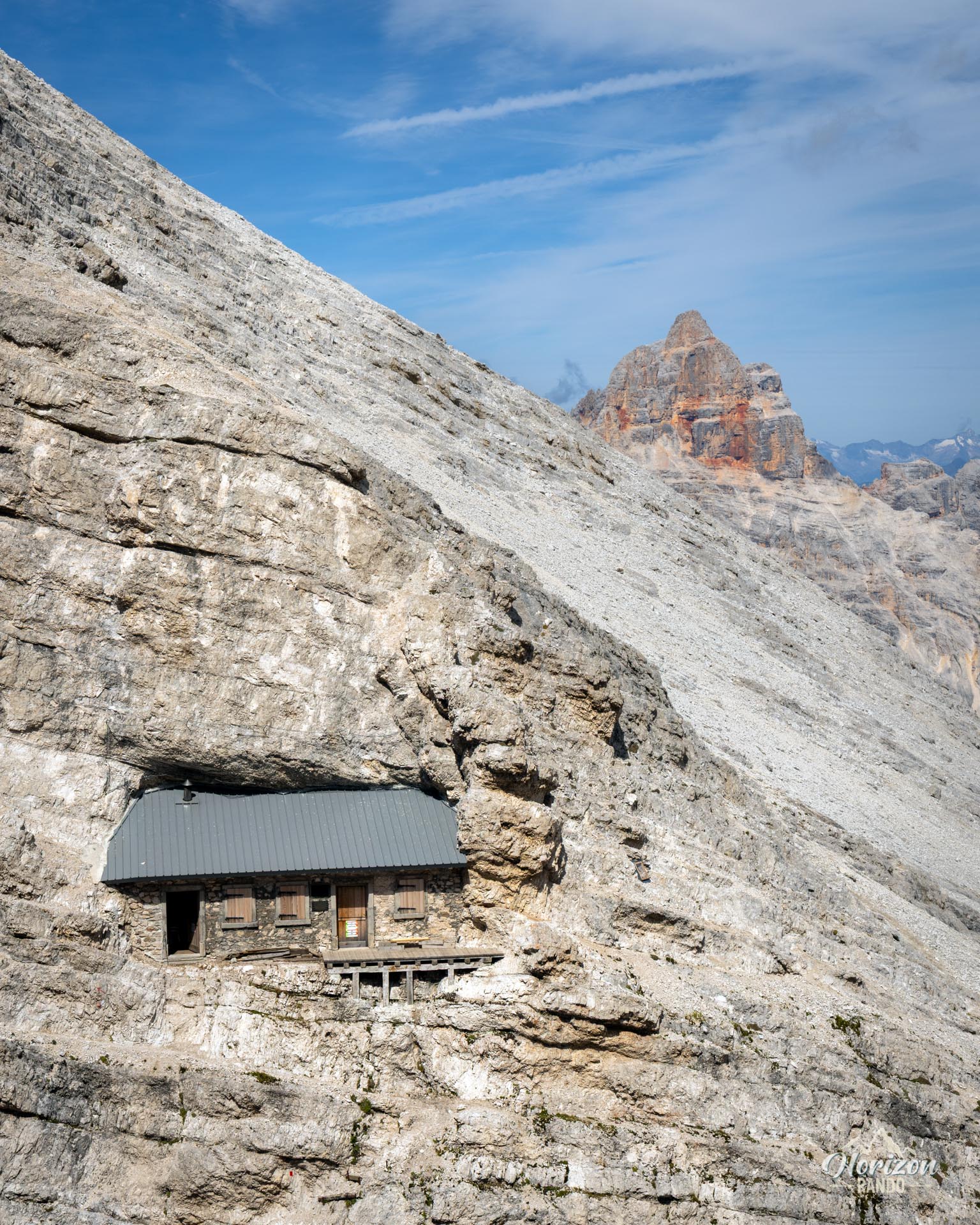
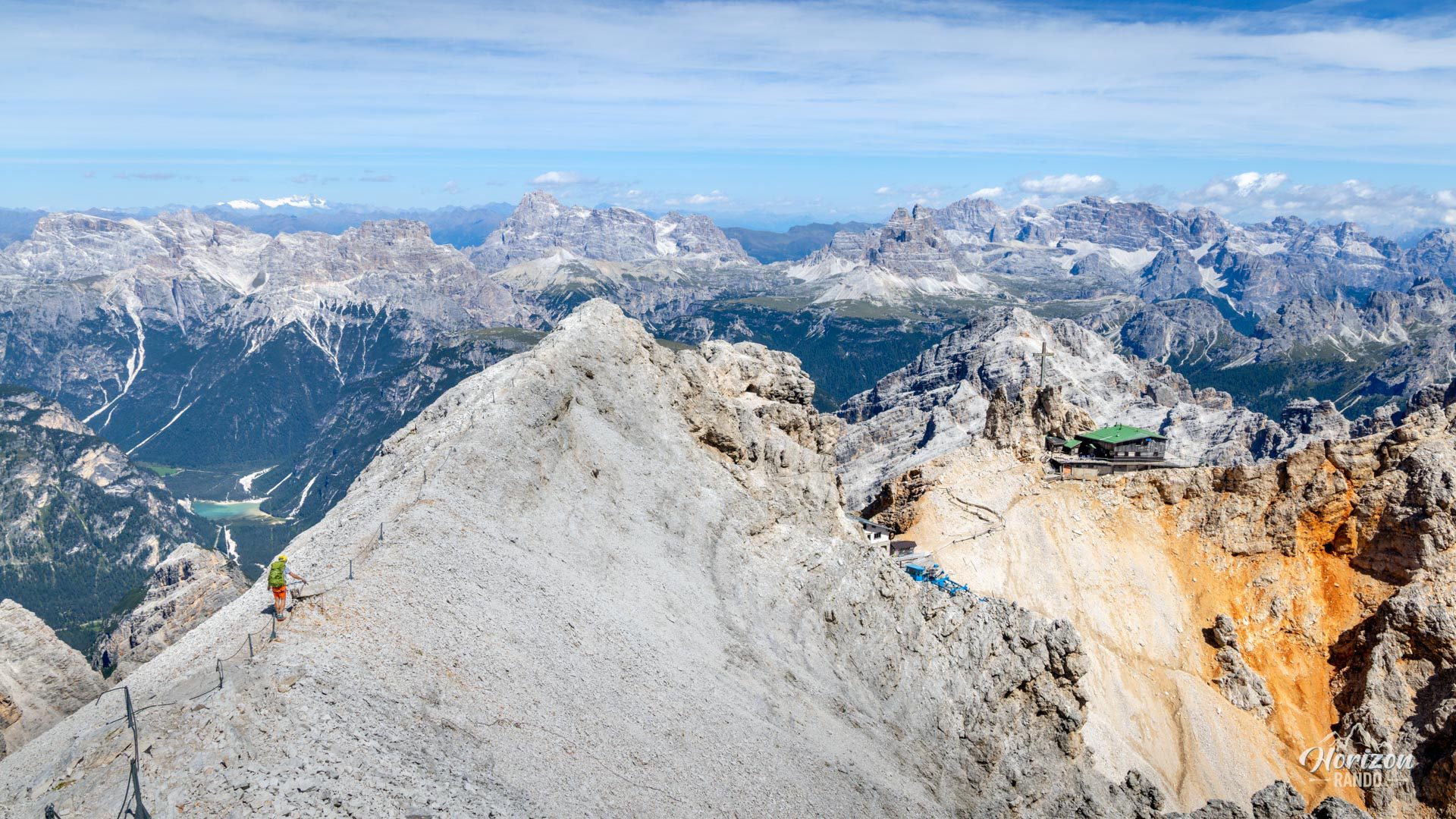
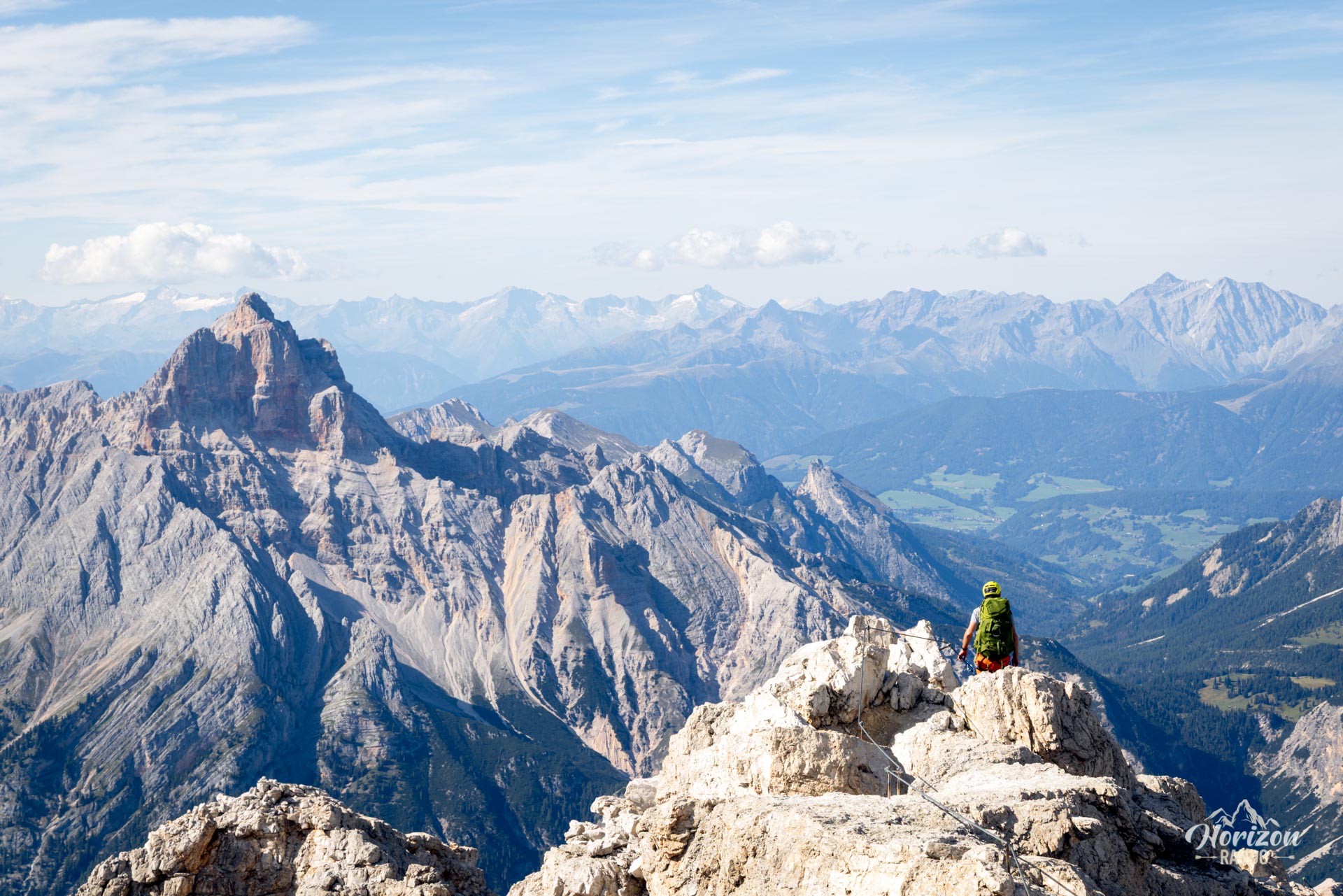
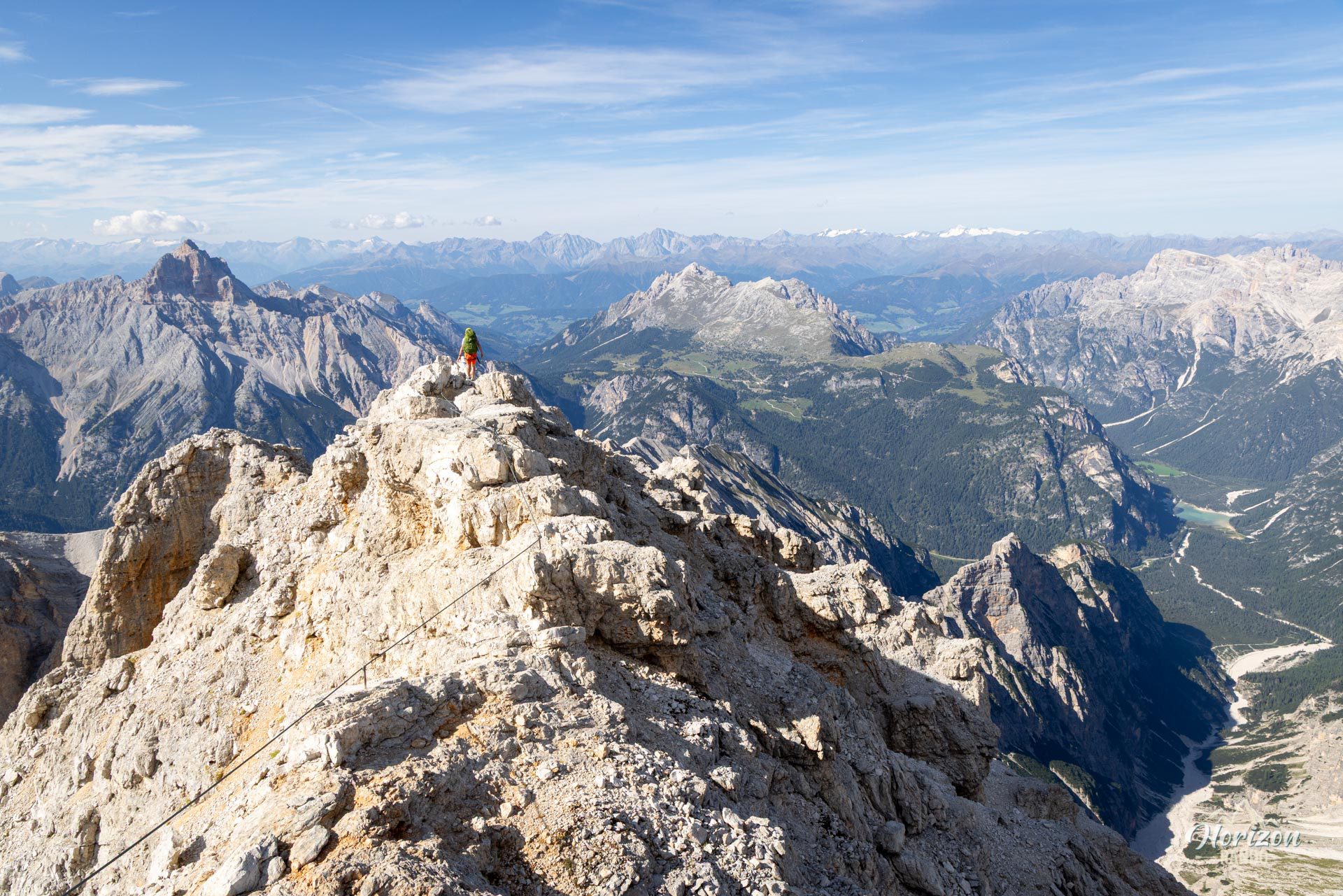
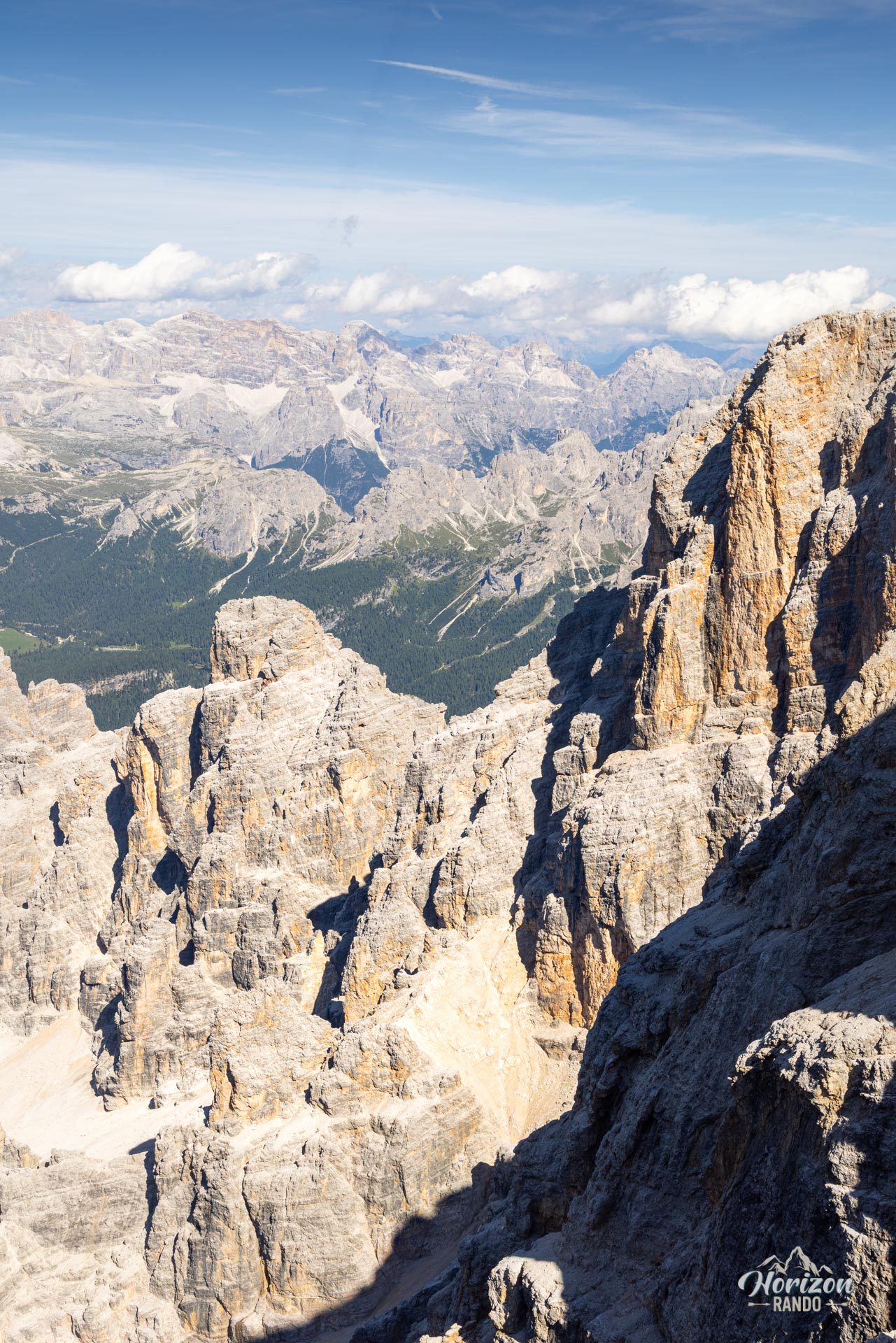
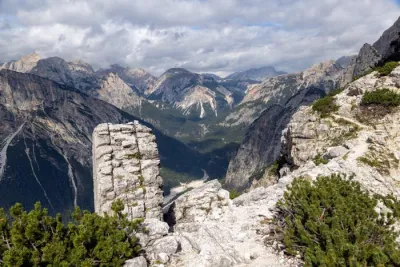
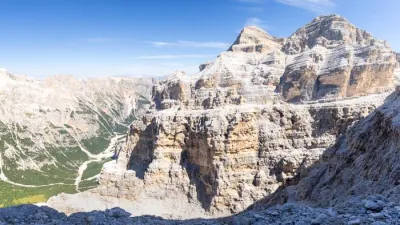
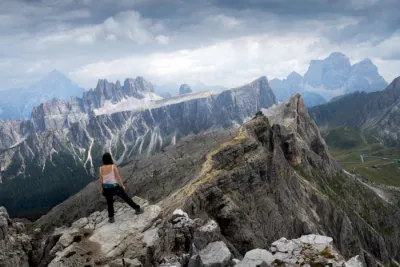
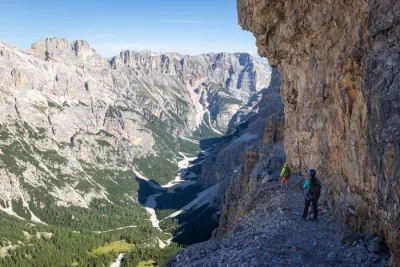
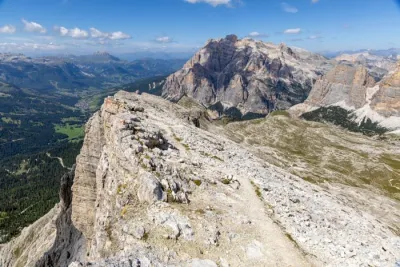
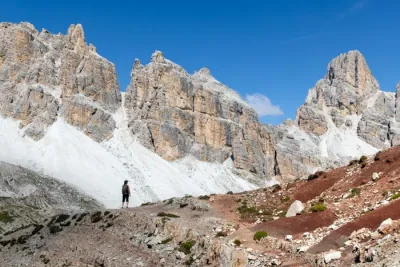
The route then follows the long southern ridge of Cristallo for several kilometers, alternating between equipped sections, ledges carved into the rock face, short wartime tunnels, and walking sections. The equipped passages are not very technical, but the exposure is almost constant, so you must remain vigilant and belay yourself systematically. You will pass the Buffa di Perrero bivouac (2,770 m) — a former military shelter that was restored in 2022 —, as well as the Forcella Grande and the summit of the Cresta Bianca (2,932 m).
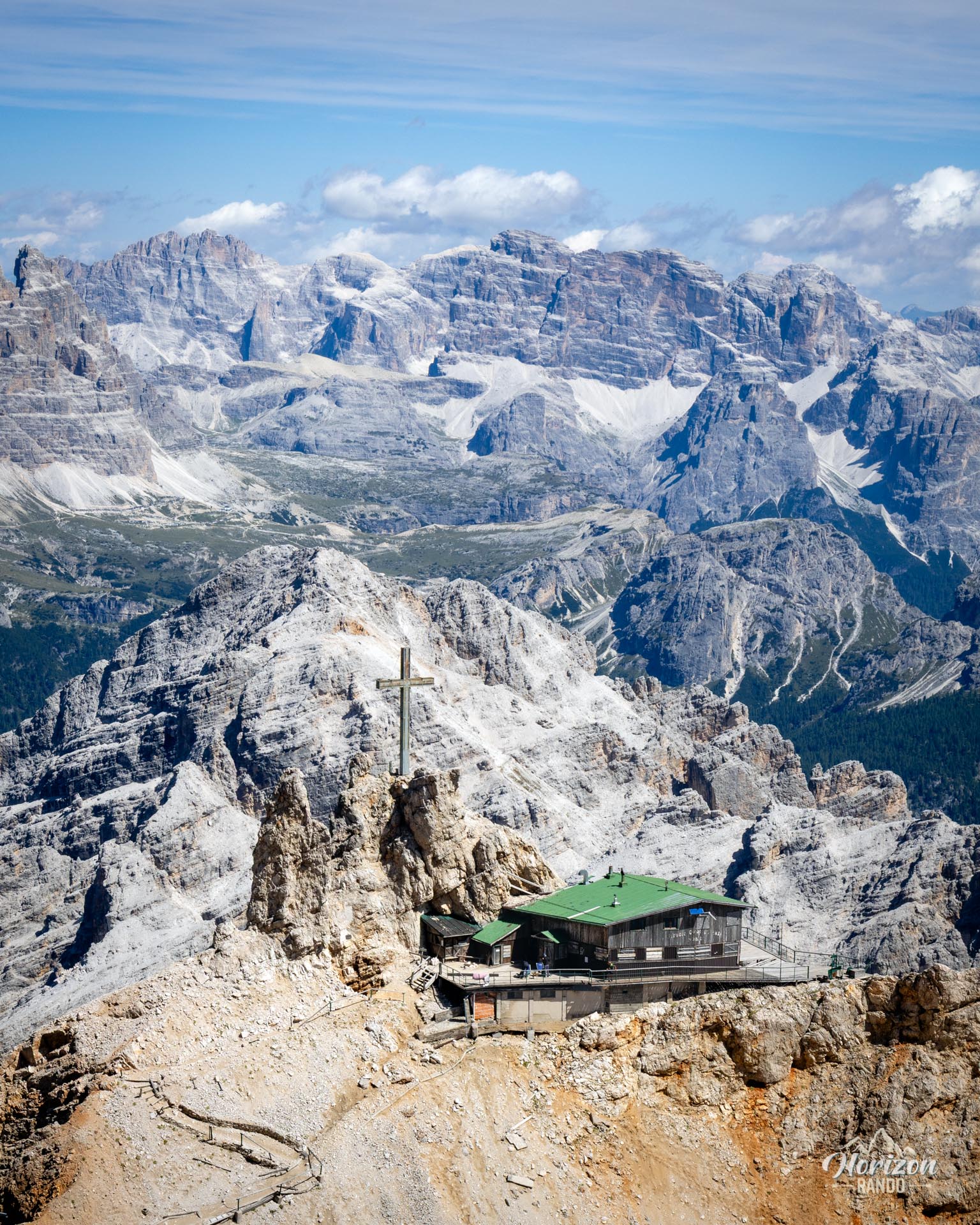
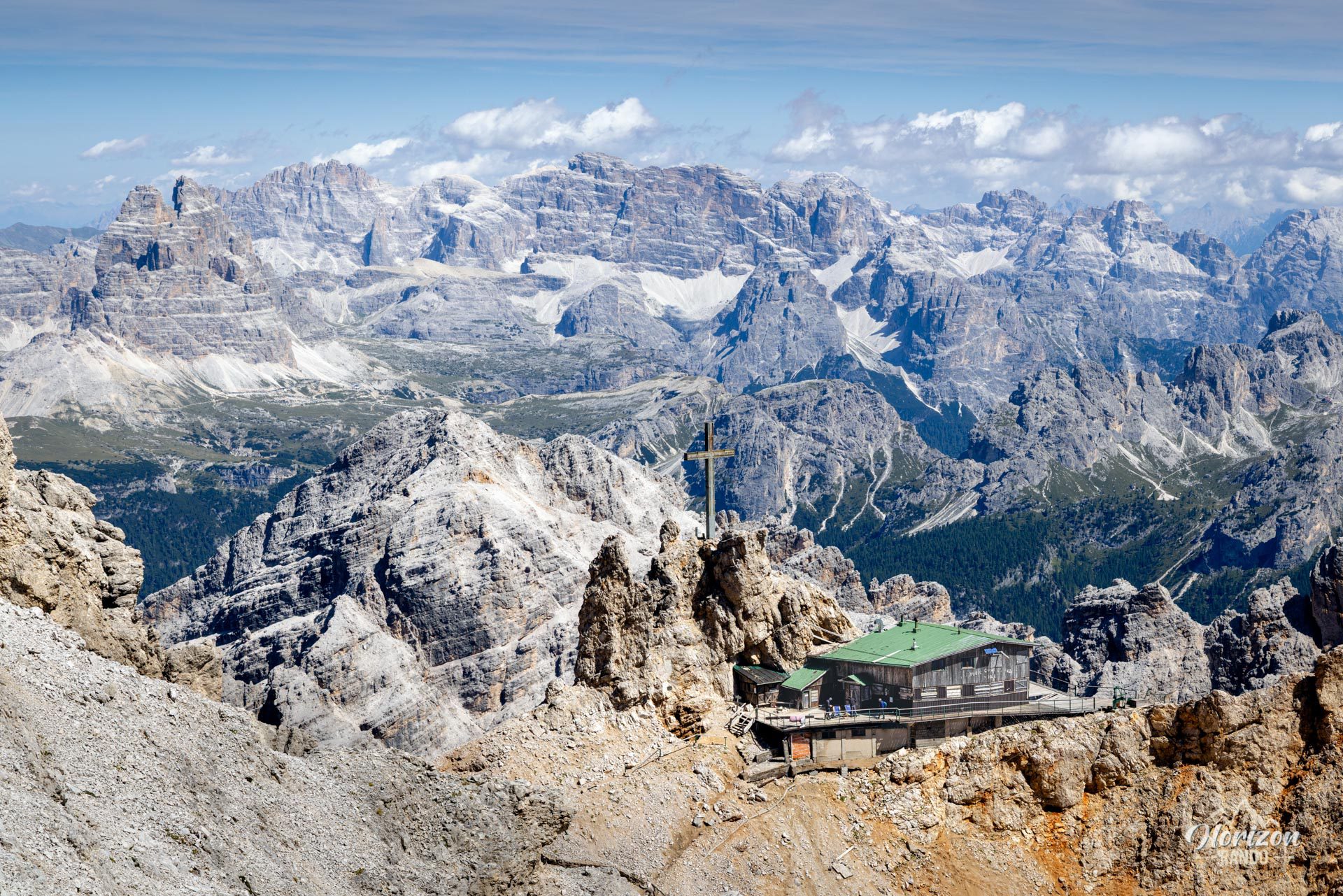
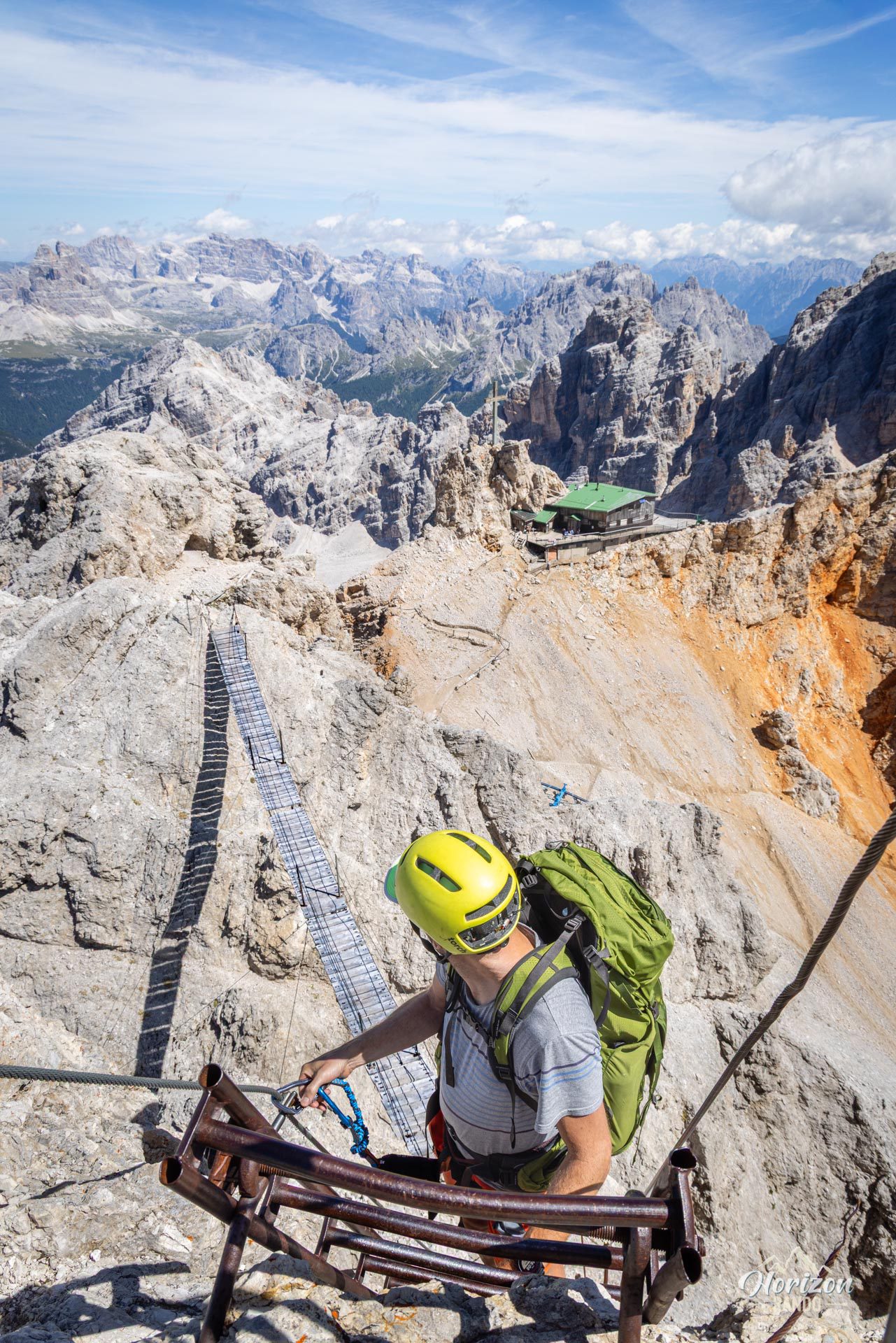
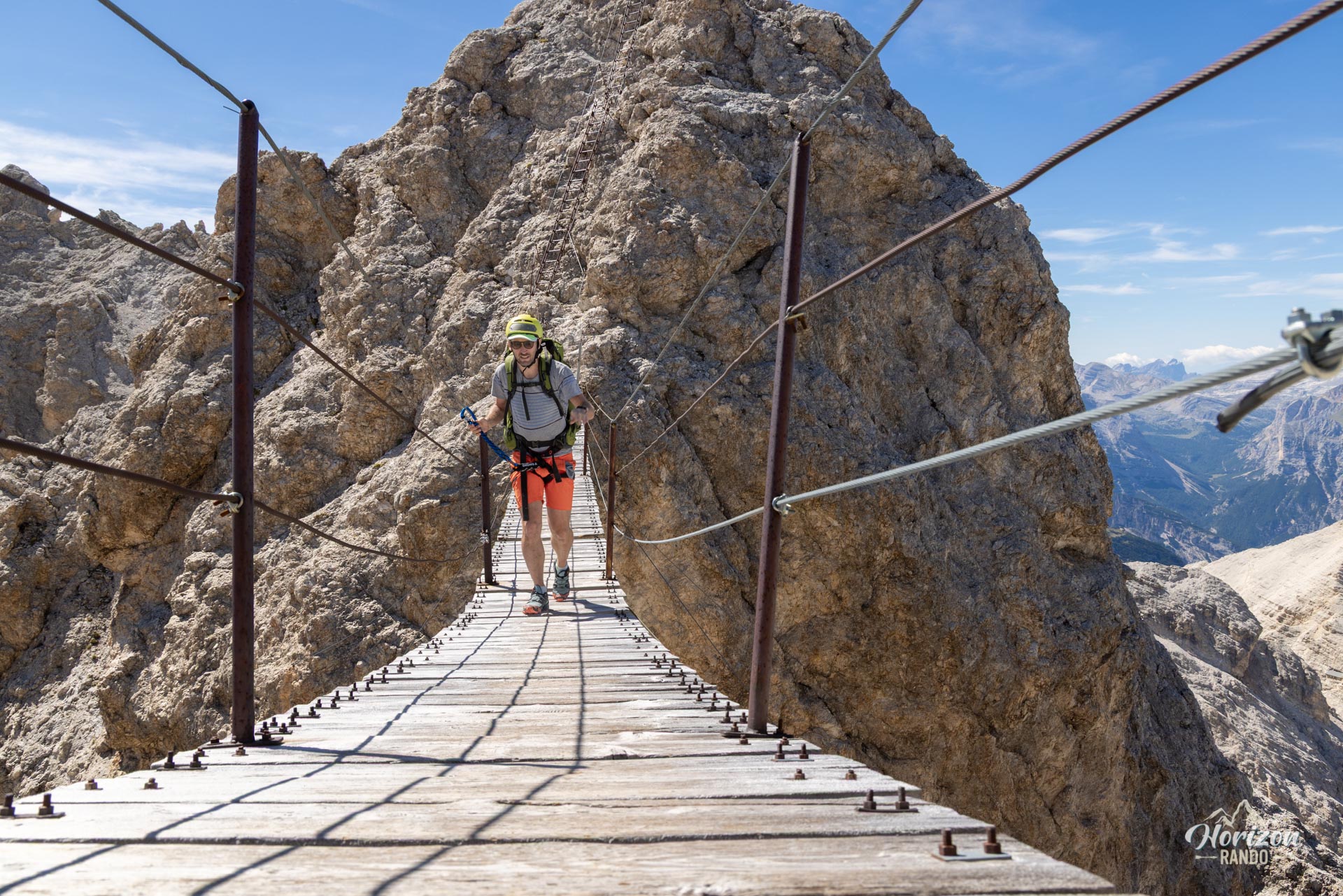
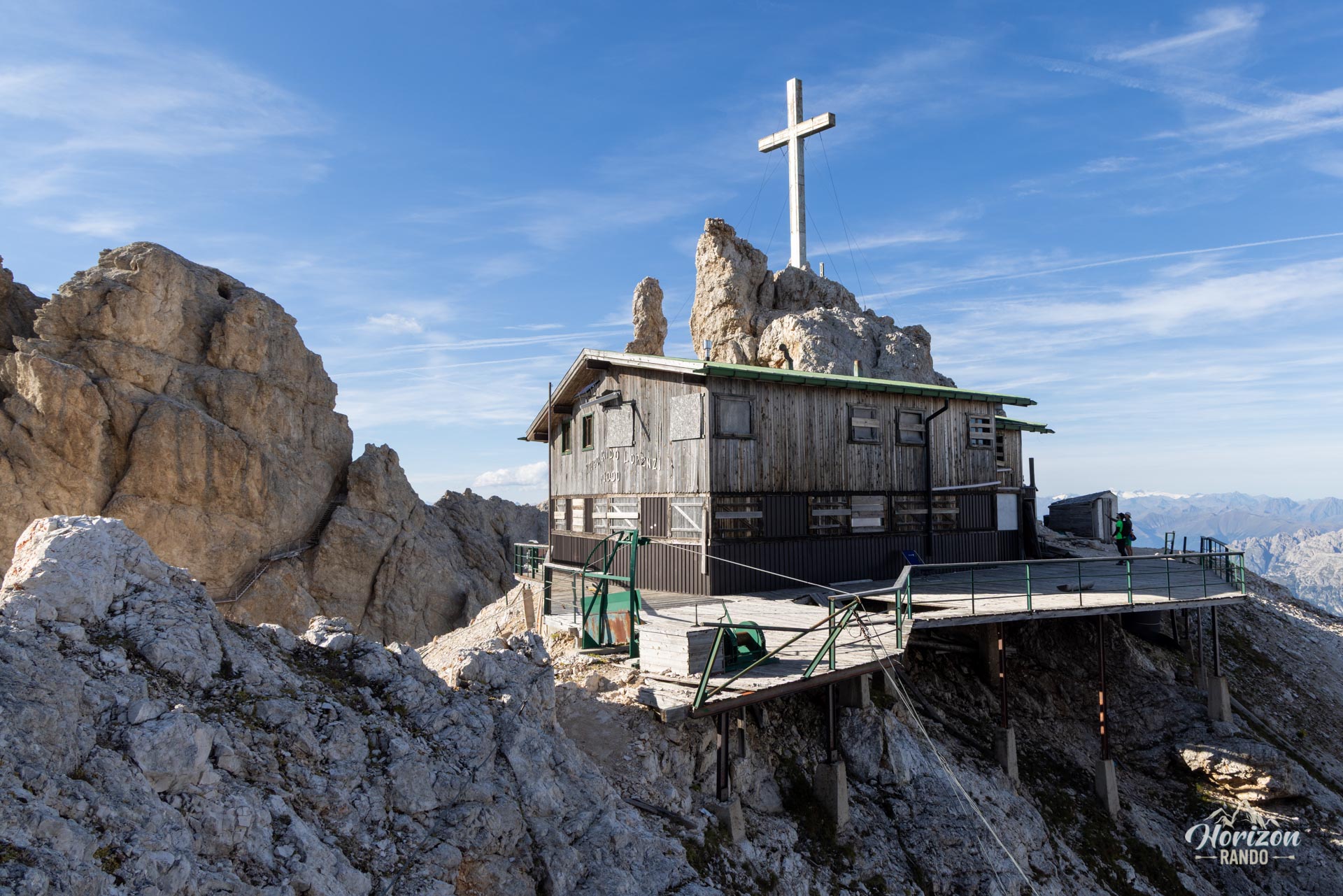
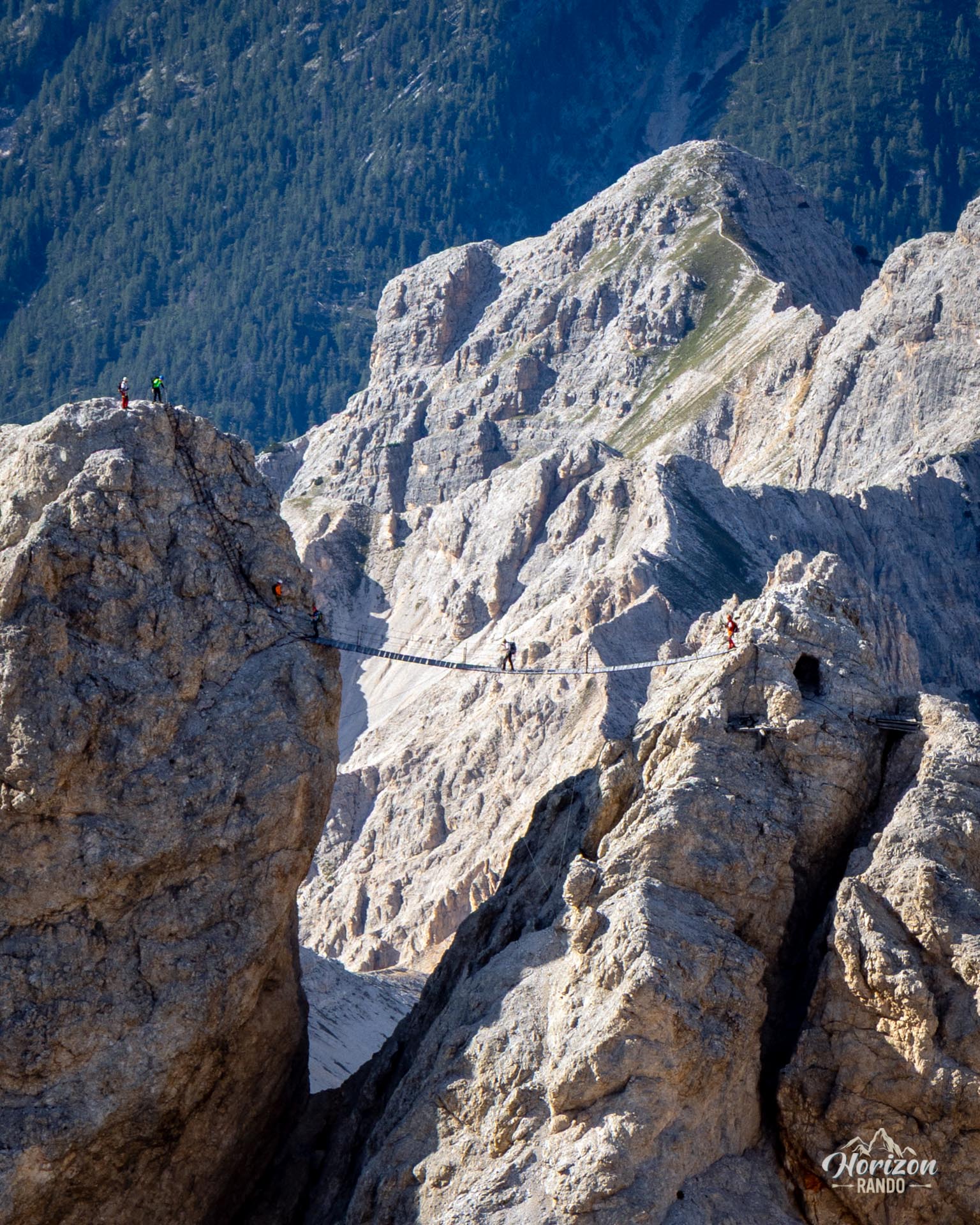
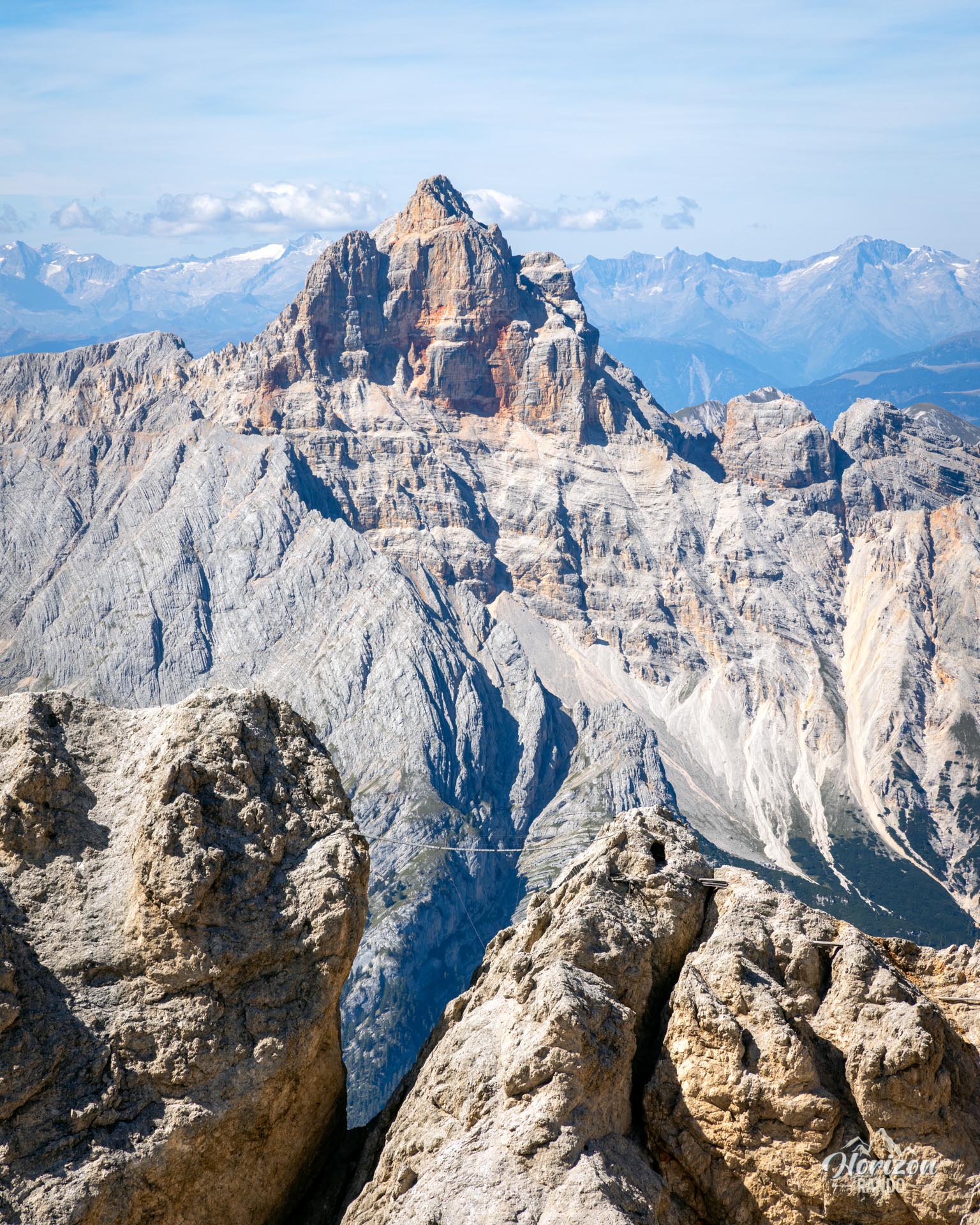
As you approach Ponte Cristallo, the equipped sections become longer, alternating between rocky outcrops and exposed ledges. A short round trip from the ridge leads to the summit of Cristallino d'Ampezzo (3,008 m) — a highly recommended detour for the 360° panorama. Next, you cross the Ponte Cristallo, a thirty-meter-high suspension bridge and the true emblem of the Dibona via ferrata. After a few more ladders and cables, you will reach Forcella Staunies (2,906 m) and the ruins of Rifugio Lorenzi, which has been closed and abandoned since 2016.
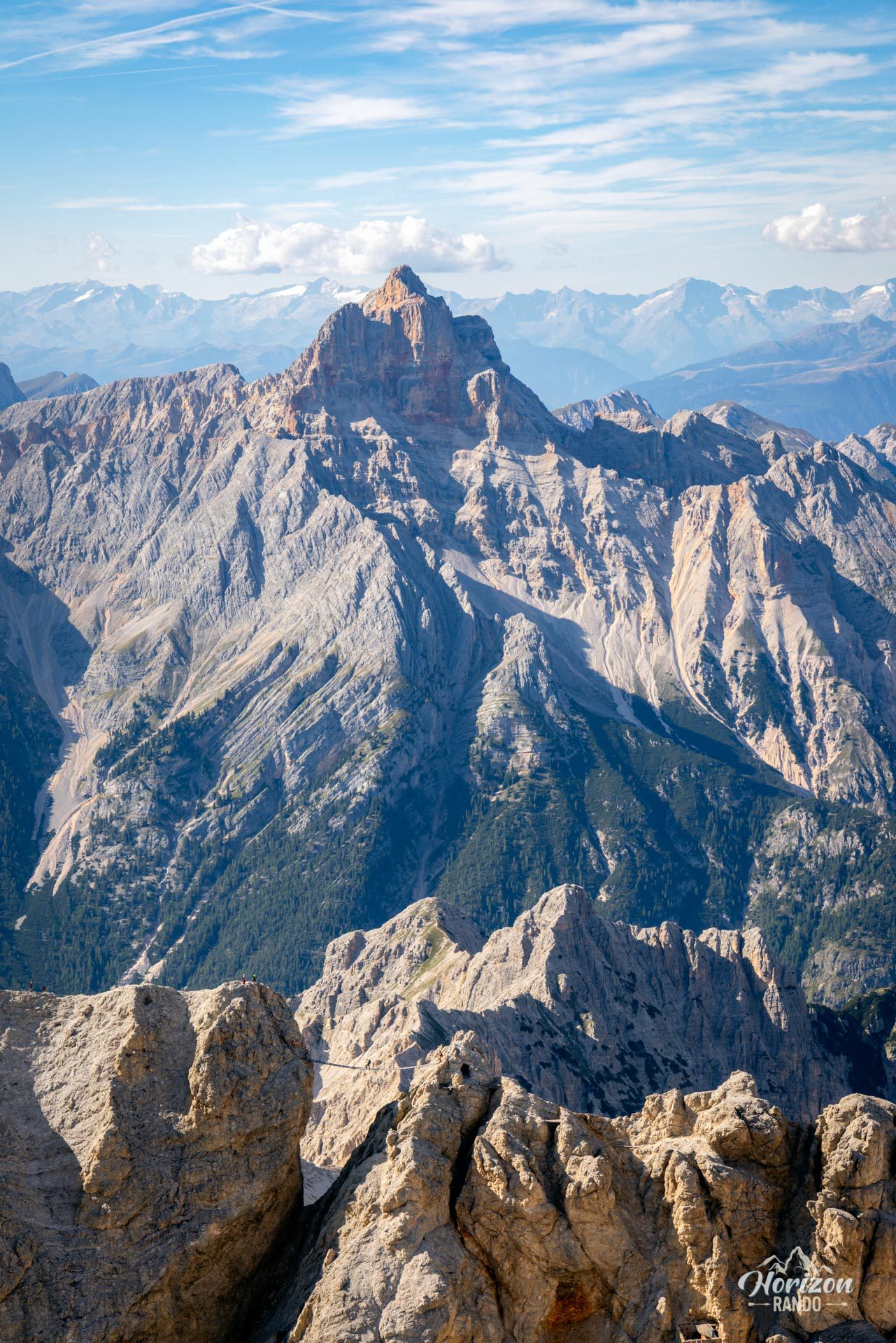
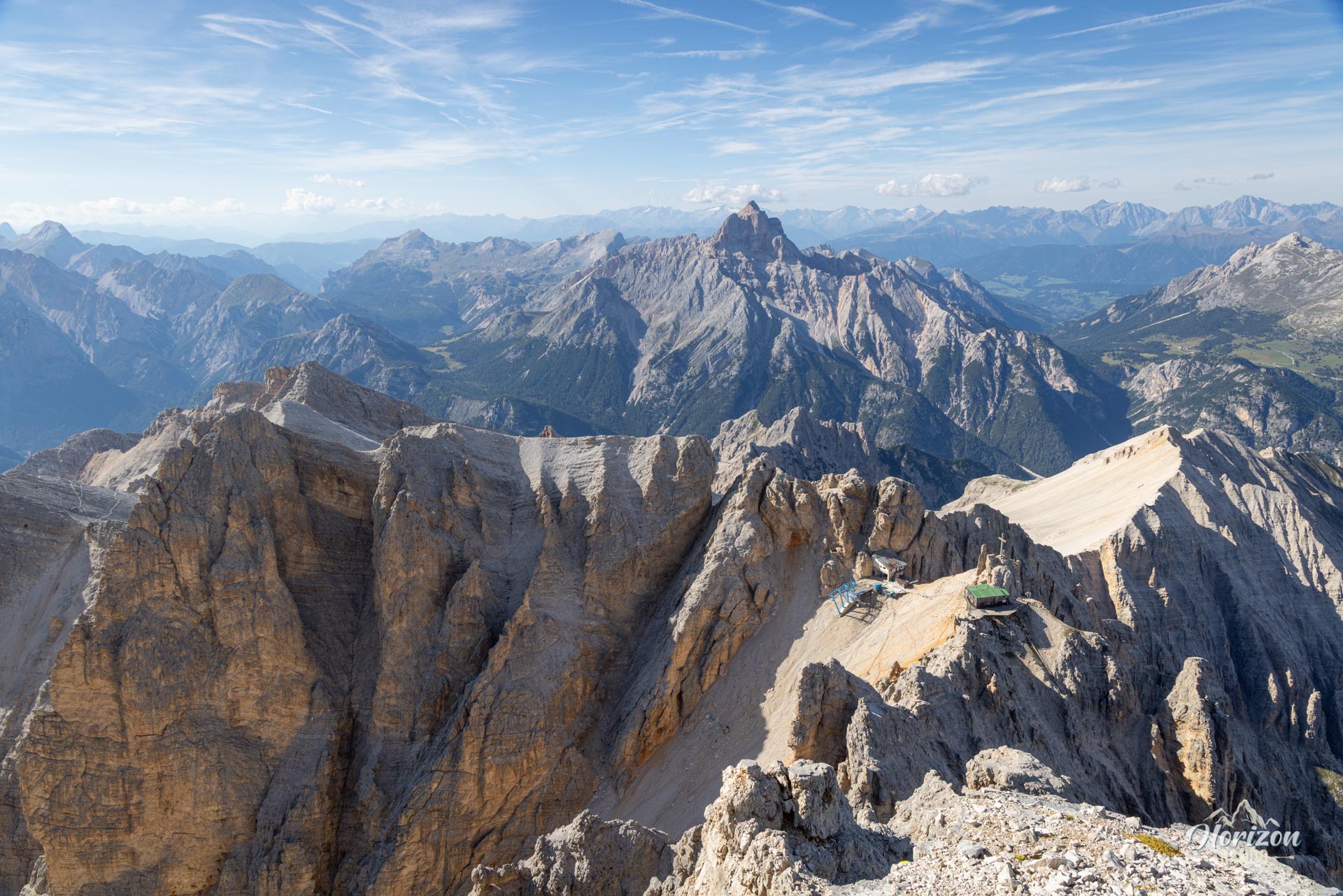
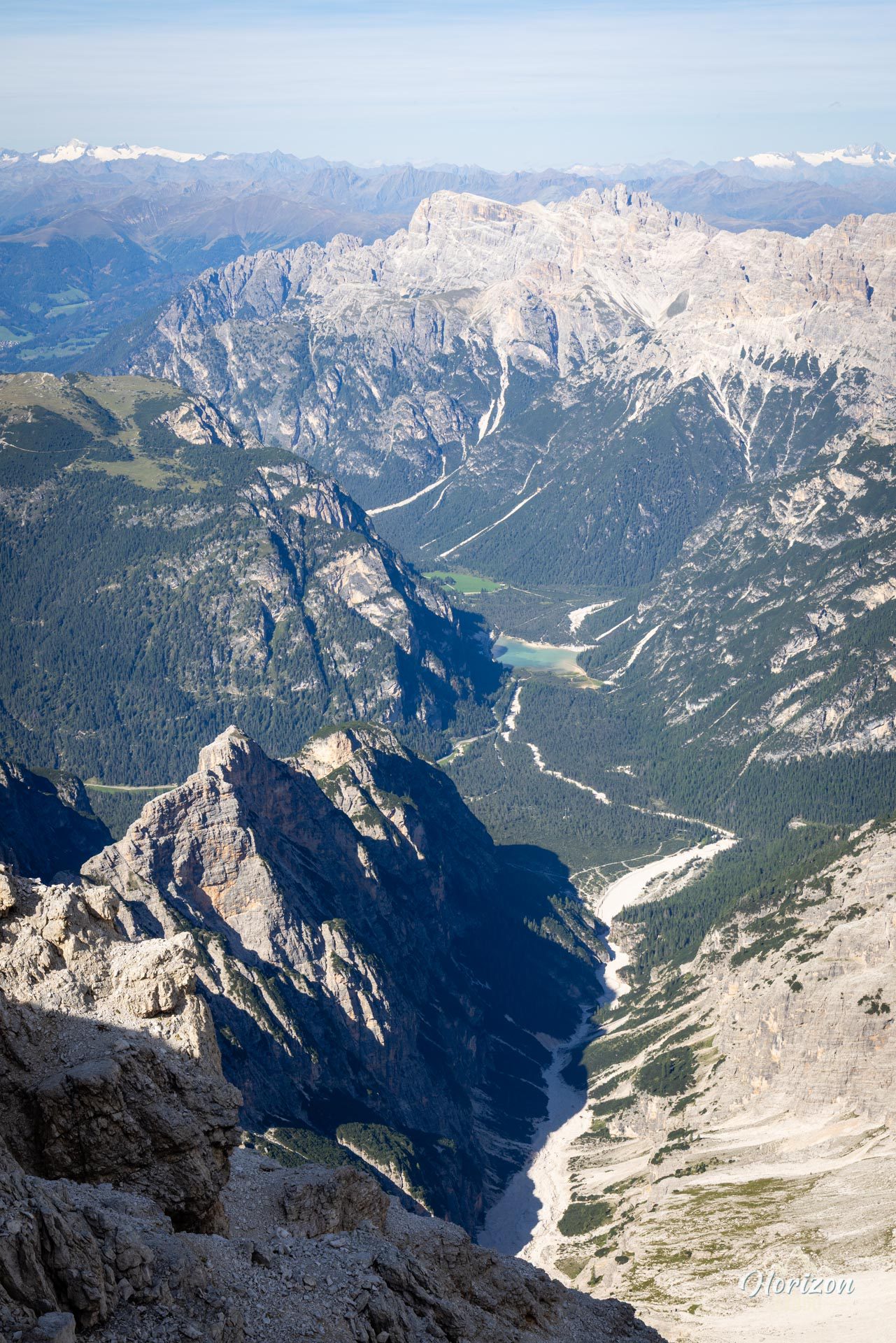
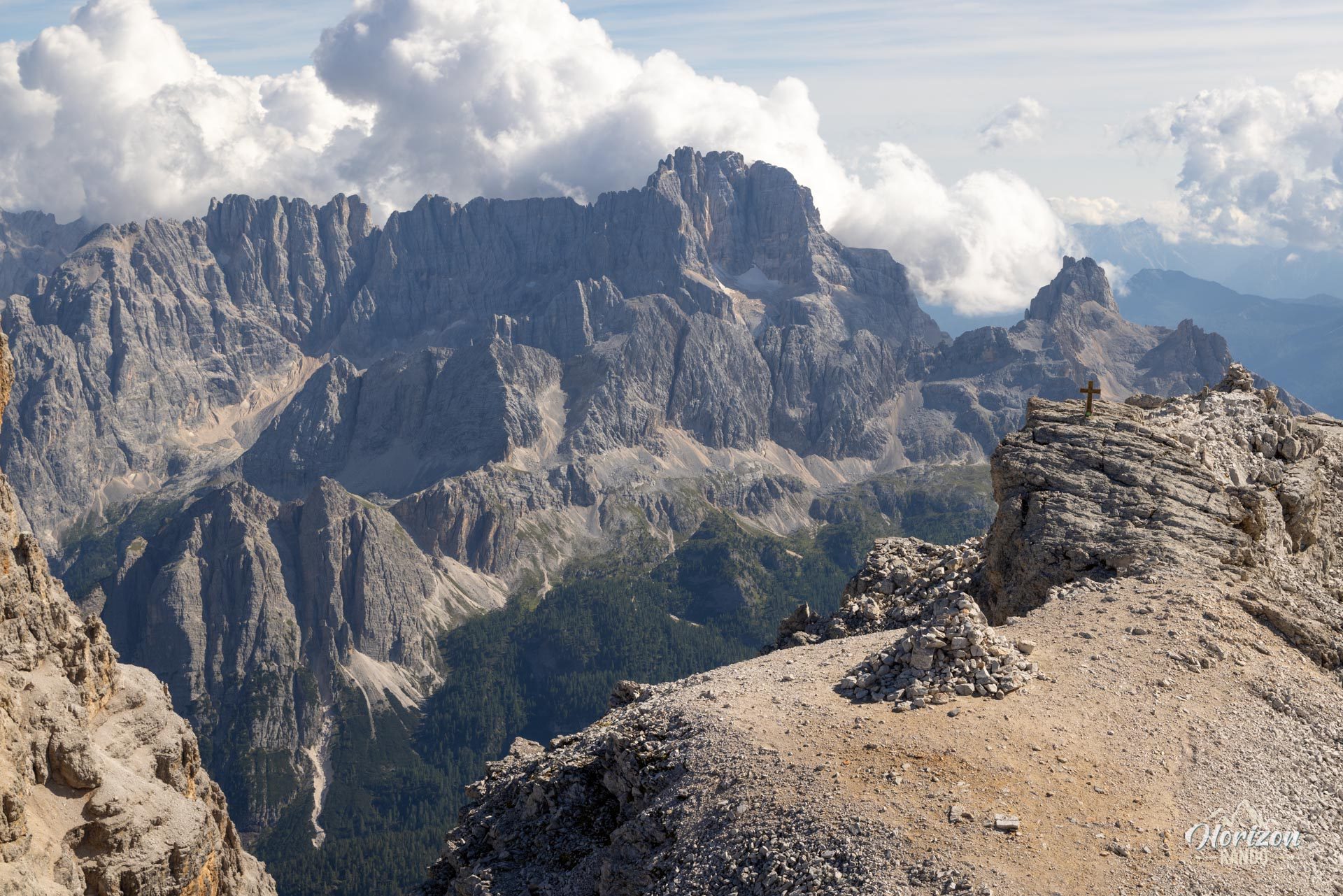
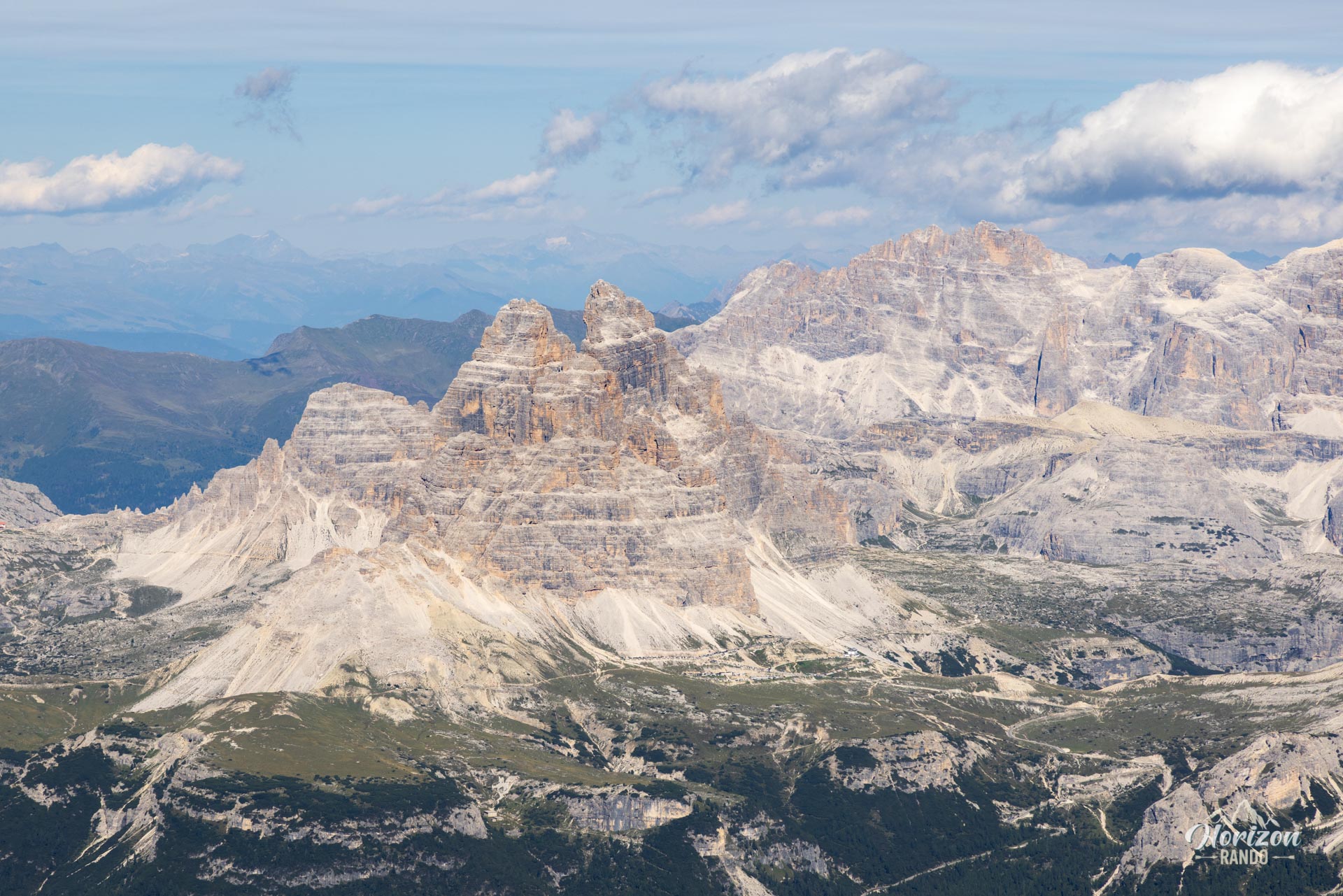
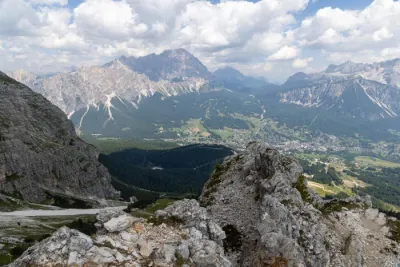
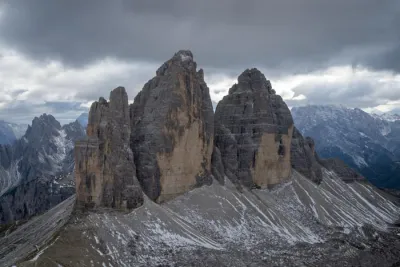
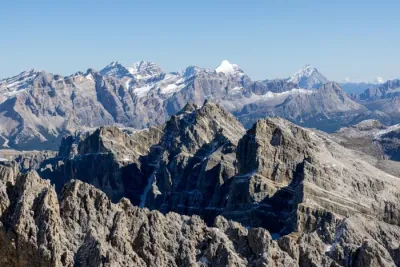
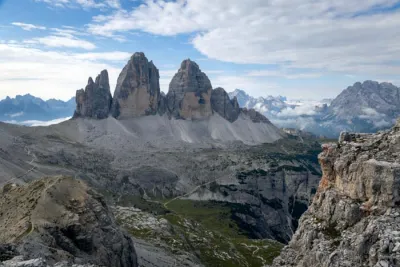
This is where the second via ferrata begins. Just behind the refuge, the Marino Bianchi route follows the Cristallo di Mezzo summit ridge. It is shorter but more technical than the Dibona route and features a series of rock steps and overhangs, with a few sections where you need to pull on your arms. At the Cristallo di Mezzo summit (3,150 m), you can see the Tofane to the west, the Sorapiss to the south, the Tre Cime to the east, and the Lago di Landro to the north. The descent follows the same route back to the Lorenzi Refuge.
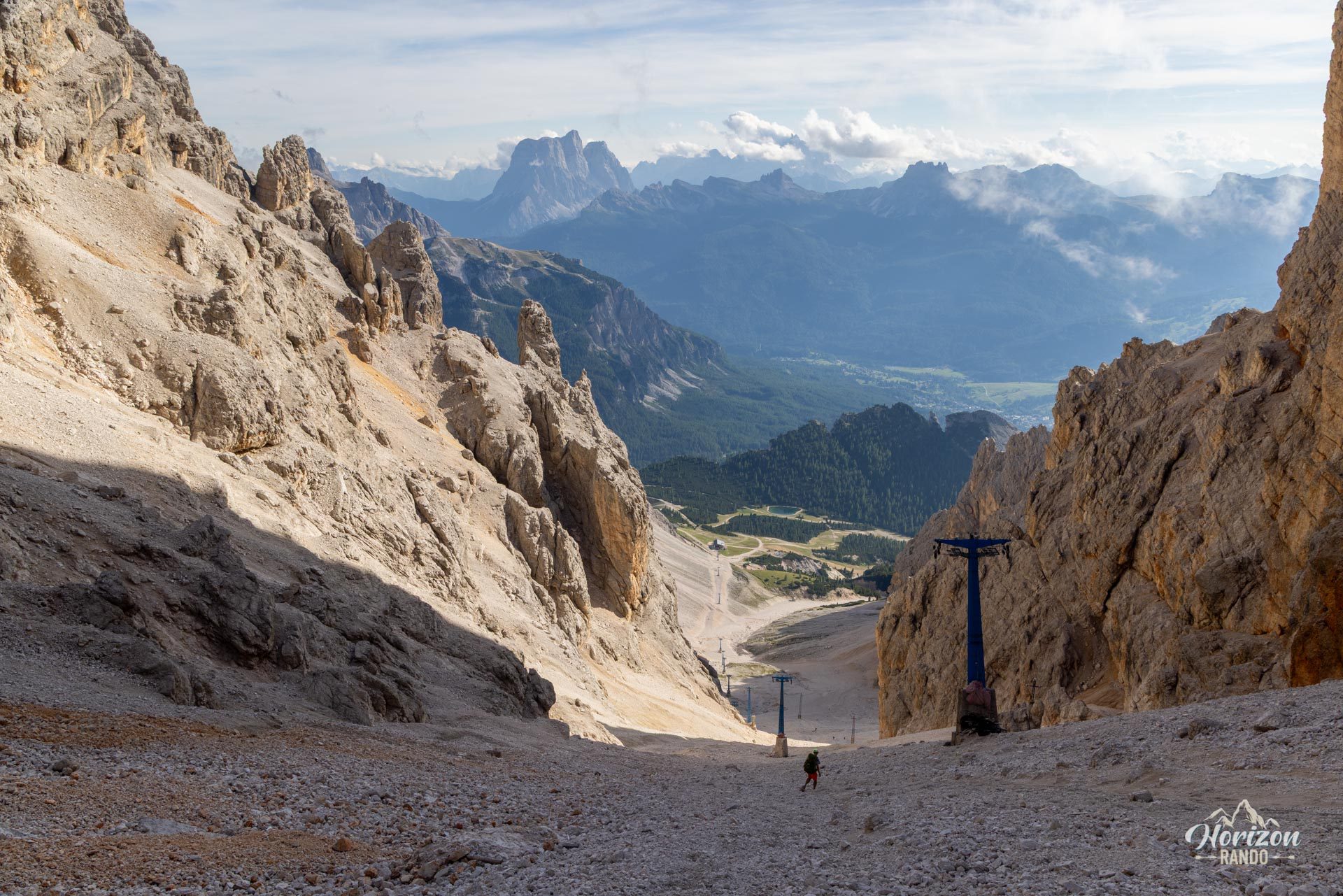
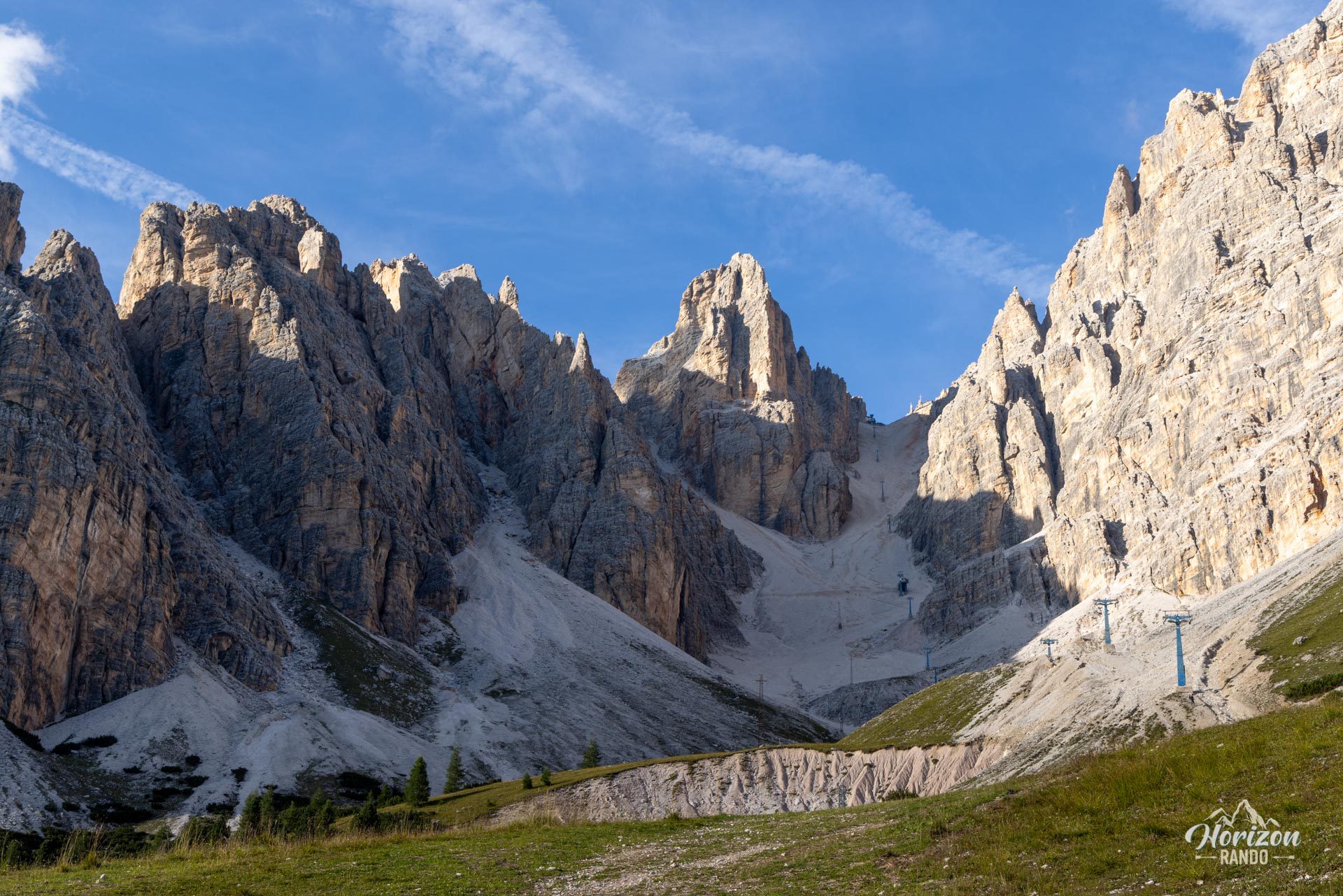
From Forcella Staunies, the final descent begins with approximately 700 meters of elevation loss over unstable scree in a long, steep gully. This route is ideal for hikers who are comfortable on this type of terrain and can take long strides and slide downhill with control; others will find it long and punishing on the knees. At the bottom, you will reach Rifugio Son Forca, and then Passo Tre Croci via trail no. 203.
What you'll love
- The long, panoramic ridge traverse, which offers hours of exceptional views of the Eastern Dolomites.
- The Ponte Cristallo, a 30-meter-long suspension bridge made famous by the movie Cliffhanger.
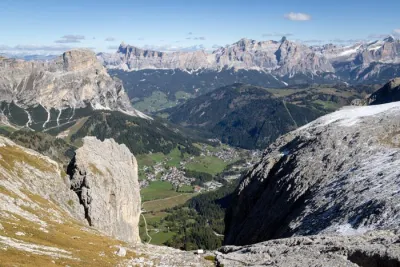
- The 360° panorama from Cristallo di Mezzo with spectacular views of the Tofane, Sorapiss, Tre Cime, and Croda Rossa.
- The immersion in World War I history, with tunnels, barracks, observation posts, and the Buffa di Perrero bivouac.
- Low foot traffic for such an iconic route, a direct consequence of the Staunies chairlift closure.
Practical information
Start
Free parking at the Passo Tre Croci trailhead. Arrive before 7:00 a.m. during peak season to secure a spot, as the very popular Lago di Sorapis trail also starts from this parking lot.
Equipment
A complete via ferrata kit is required (helmet, harness, and lanyard with an energy absorber). Trekking poles are strongly recommended for the descent of the Staunies gully.
Direction of the route
I recommend hiking the loop clockwise (ascend via Ivano Dibona, complete the round trip from Forcella Staunies via Marino Bianchi, and descend via the Staunies gully). The reverse route requires climbing the long Staunies scree slope, which is particularly arduous.
Best time to go
From early July to late September. Early in the season, snow and ice may remain in the Staunies gully and on the northern sections of the ridge.
Buffa di Perrero bivouac
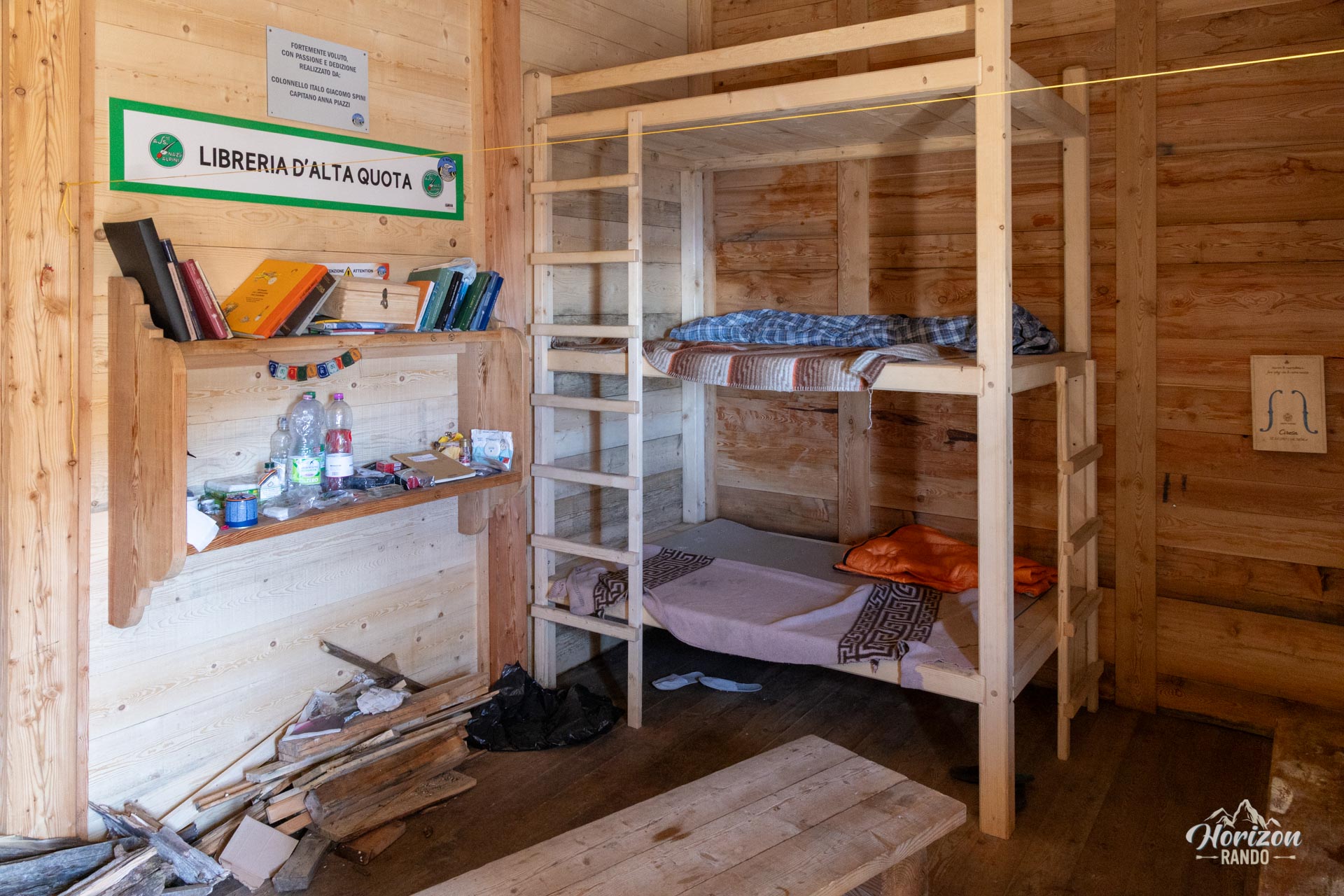
Unmanned and very basic (see photos). It is useful in an emergency or to split the hike over two days.
Photos
See all 25 photos →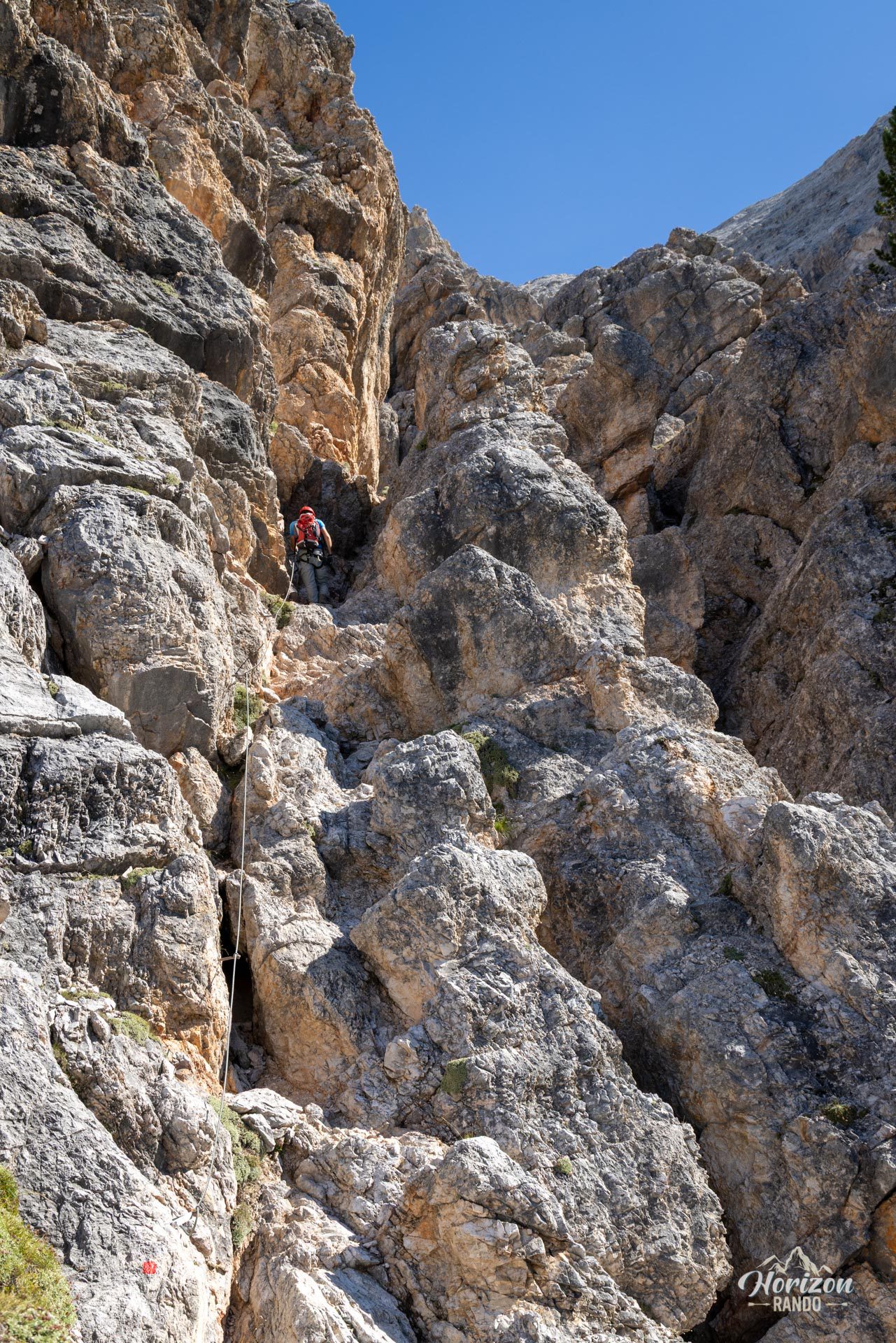
More hikes to do in the Dolomites
Nearby hikes
Printed from www.horizonrando.fr/en/hiking-dolomites/via-ferrata-ivano-dibona-and-marino-bianchi/